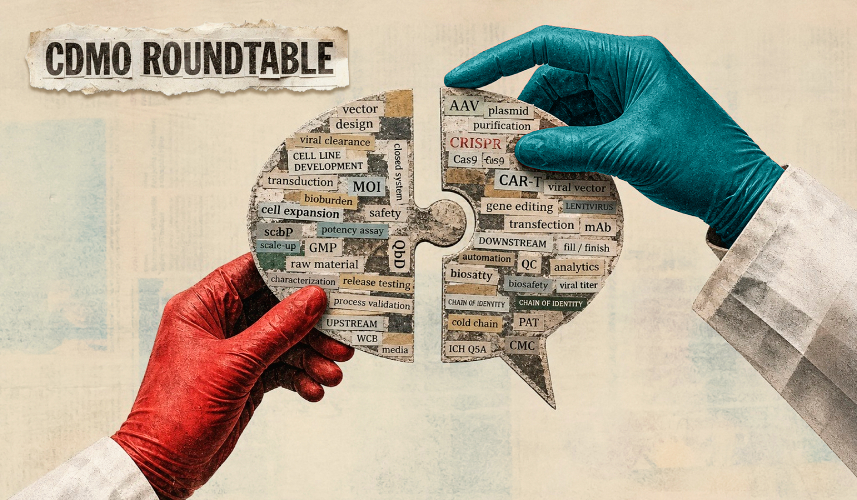
In the cell and gene therapy space, the road from promising biological concept to commercialized treatment is long and complex. No matter how elegant the science, scale-up and manufacturing is often a key determinant of a therapy’s safety, efficacy and commercial viability — making CDMOs structurally vital to the industry.
Bringing next-generation therapies to patients at industrial scale requires close collaboration between sponsors and their partners. Yet the gap between scientific ambition and the realities of process development, scale-up and commercial readiness continues to create friction, particularly as capital constraints weigh on much of the sector.
Sometimes, the most revealing parts of interviews are the things left unsaid: the implied frustrations, the hinted tensions. Having picked up on these themes in conversations across the industry, we invited CDMOs to discuss the most common pressure points in sponsor relationships, from intellectual property ownership and development timelines to operational transparency and cost alignment.
Their responses paint a clear picture of how CDMOs view their role: Engage sponsors early, approach the partnership as a single team rather than a vendor-client arrangement, and be transparent about risks before they become crises.
Read the full list of responses below:
Subscribe to our e-Newsletters
Stay up to date with news, articles and insights relevant to cell and gene therapy development and manufacturing. Plus, get special offers from Cell & Gene Therapy Review delivered right to your inbox!
Sign up now!