The potential of gene therapies to significantly improve and extend the lives of patients with debilitating diseases has been clearly demonstrated, but the high cost of these treatments raises questions about continued commercial viability. Inefficient viral vector manufacturing processes continue to contribute significantly to those high costs.
Both adeno-associated virus and lentiviral vectors are typically produced in human embryonic kidney (HEK) 293 cells, which are naturally adherent. Initial processes developed in flatware systems such as plastic culture plates or roller bottles are not practically scalable. The industry has moved to suspension-adapted HEK293 cell lines that support cell culture in stirred-tank bioreactors (STRs), but transitioning from an early-phase adherent to a scalable suspension process often requires extensive cell-line adaptation and process redevelopment. In addition, scaling viral vector processes in STRs can be challenging due to impacts on mixing and gas exchange, as well as shear stresses introduced in larger bioreactors.
Consequently, new processing solutions are needed that enable both high productivity and high quality. Structured, fixed-bed bioreactors represent one such approach, offering scalable adherent viral vector manufacturing processes with the potential for meaningful reductions in cost of goods for both in vivo and ex vivo gene therapies.
Translating therapeutic potential
The ability of gene therapy to address many types of inherited diseases has clearly been demonstrated, with more than 20 gene therapies being market approved across both the U.S. and EU.1,2 Both in vivo therapies delivered using adeno-associated viral (AAV) vectors and ex vivo cell therapies engineered using lentiviral (LV) vectors are improving outcomes and extending patients’ lives. Moreover, at the end of 2025, more than 2,100 cell and gene therapies being developed by 1,800 companies were undergoing evaluation in global clinical trials.3 Important new treatments against cardiovascular and autoimmune diseases are advancing towards BLA filing. Novel in vivo adoptive cell therapies represent a promising new type of gene therapy. Several regulatory decisions and additional BLA filings are anticipated in 2026.
Despite continued innovation and a robust pipeline, questions remain about the commercial viability of gene therapies. Access is limited by the exceptionally high cost of these life-changing medicines, with some treatments exceeding $4 million per patient. Even in high-income countries, market access challenges and fragmented reimbursement systems can delay or restrict coverage, creating significant barriers to patient access.
Structural concerns about the commercial sustainability of gene therapies are also impacting the venture capital funding of CGT development, which has declined by approximately 60% since its peak in 2021.5 There has also been a shift in focus, with more deals targeting later-stage, lower-risk programs, while only a handful of early-stage programs continue to attract investment.
Manufacturing inefficiencies, a core issue
At the heart of these concerns are persistent challenges in viral vector manufacturing. High cost of goods (COGs), coupled with lengthy process development and scale-up timelines, continue to hinder the timely and affordable commercialization of gene and gene-modified cell therapies. Much of the cost stems from inefficient bioprocesses used to manufacture adeno-associated viral (AAV) and lentiviral (LV) vectors. Although both are typically produced in HEK 293 cells, their manufacturing processes differ in several important ways.
The primary distinction lies in the upstream production process. LVs are naturally secreted into the culture supernatant through a budding process, making them well suited for continuous manufacturing strategies such as perfusion. In contrast, AAVs lack an active release mechanism and typically require cell lysis for vector recovery, introducing impurities that complicate downstream processing. The presence of multiple AAV serotypes, each with different impurity profiles, adds further complexity. These fundamental differences influence every stage of bioprocess design, from harvest strategy to impurity burden and downstream purification.
The fact that HEK293 cells naturally require a surface for attachment is another factor driving the high cost of viral vector production. Early viral vector manufacturing relied on flatware systems, such as plastic culture plates and roller bottles, which support adherent cell growth. While these systems remain well suited for early process development, offering high productivity at small scale and allowing visual monitoring of cell health, they’re difficult to scale using automated technologies. Instead, they must be scaled out by replicating numerous small-scale cultures to achieve the surface area needed for commercial production. As a result, flatware systems become impractical beyond early clinical development (or for low-volume commercial products) because of their high labor requirements, large facility footprint, and associated costs.
This issue has driven the development of suspension adapted HEK293 cell lines that support cell culture in STRs, which don’t have the same surface area constraints as flatware. This makes volumetric scale up (vs. scale out) possible. Cells grow freely in liquid media, facilitating integration into closed, automated manufacturing environments. As a result, suspension cultures are increasingly adopted for viral vectors, particularly in high-dose applications like AAV-based therapies.
Still, STRs present their own challenges for viral vector production. Complex transfection processes are common, and mechanical shear from impellers and air sparging can damage cells and reduce viral titers, particularly at large scale, limiting process flexibility.8,9 Scaling suspension cultures also becomes more difficult as larger bioreactors affect mixing and gas exchange. In addition, the large operating volumes and freely suspended cells complicate key steps such as transfection, harvest, and nuclease treatment.
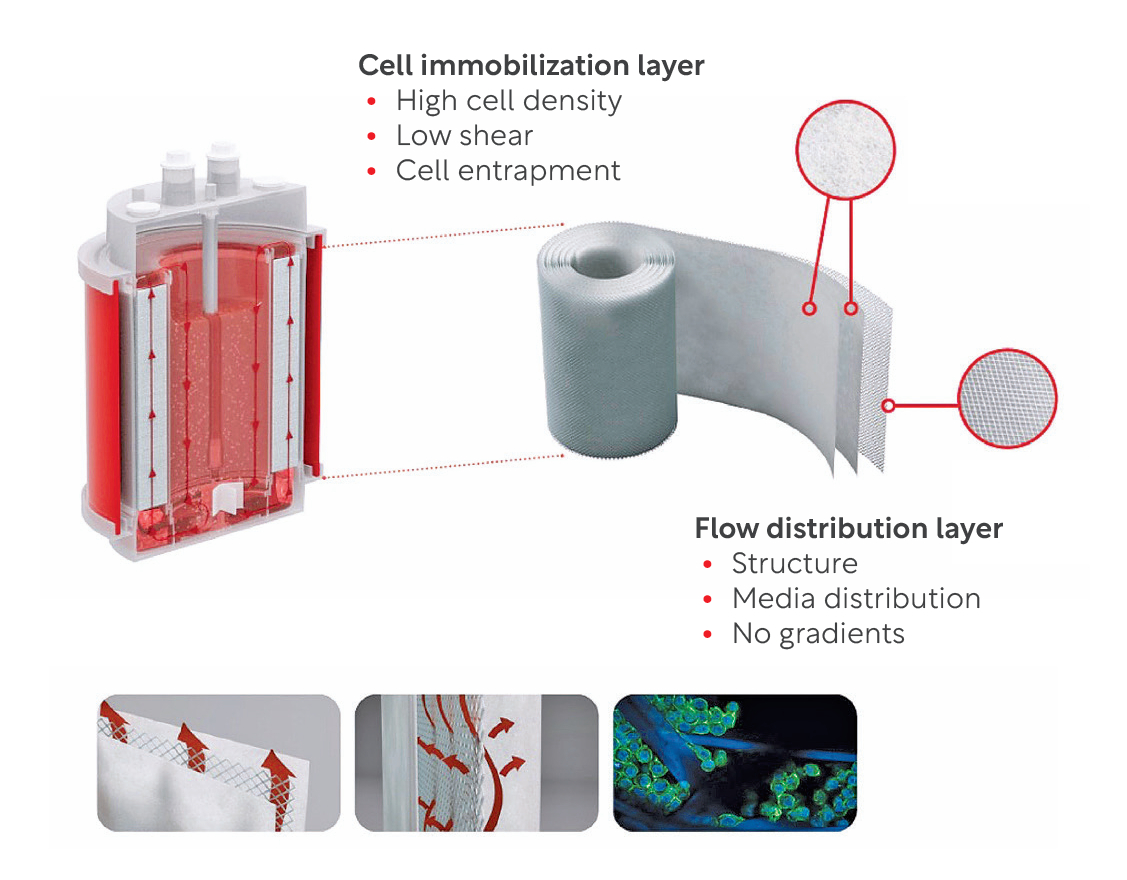
Figure 1. Structured fixed-bed bioreactor design by Univercells Technologies
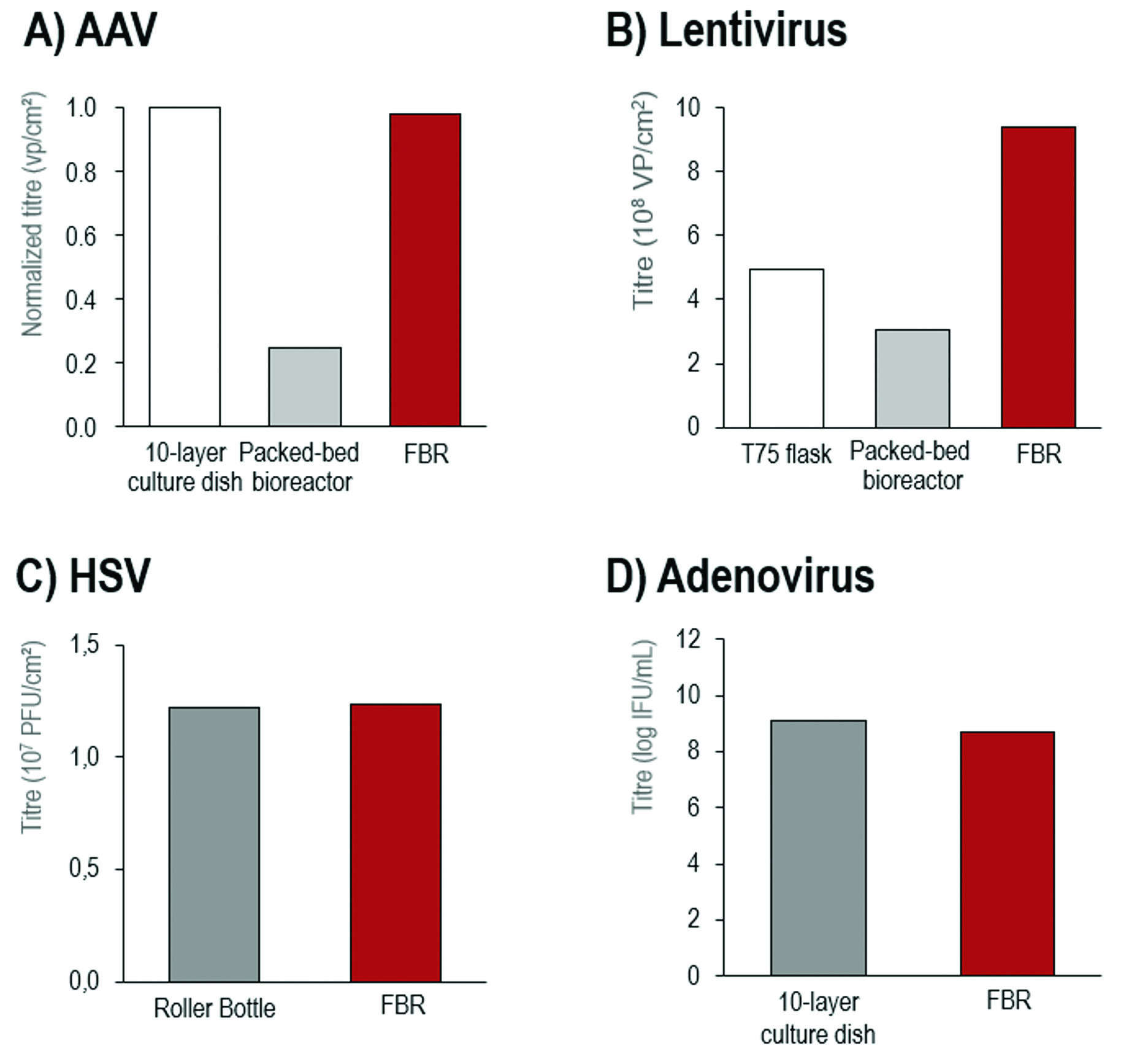
Figure 2. Increased productivity observed using a structured fixed-bed bioreactor | Sources: A) M. Duyck et al., Univercells & 4DMT, 2019. B) H. Leinonen et al., Kuopio Center for CGT, 2019. C) Tang et al., Obio Technologies, 2022. HSV: Herpes-Simplex Virus. D) Drugmand et al., Univercells Technologies & Momotaro, 2020.
Transitioning from early-phase adherent production to scalable suspension manufacturing often requires extensive cell-line adaptation and process redevelopment. Scaling STR-based processes also introduces shear, mixing, and gas exchange constraints that make it difficult to replicate optimal small-scale performance. The result is a costly, time-intensive development process that often yields lower titers, reduced product quality, and poor manufacturing economics.
Redefining viral vector manufacturing with FBRs
Fixed-bed bioreactors (FBRs) have emerged as an alternative. Early-generation FBRs, also known as packed-bed bioreactors, helped transition adherent processes into closed and scalable systems. The randomly packed nature and variable compaction levels of the cell growth matrices in these systems, however, often lead to non-uniform cell growth and limited scalability, factors that have inhibited their adoption for commercial manufacturing.
FBRs available for research to clinical/commercial viral vector production include the scale-X bioreactor portfolio (0.5 to 600 m2) from Univercells Technologies, iCELLis systems (0.5 to 500 m2) from Cytiva and Ascent systems (1 to 100 m2) from Corning. The BioBLU 5p from Eppendorf supports research activities with a working volume of 3.75 L. The scale-X, iCELLis, and Ascent FBRs are all automated, however, the iCELLis technology is based on randomly packed carriers, while the scale-X and Ascent bioreactors are designed with structured fixed beds.
Structured fixed-bed bioreactors with a spiral-wound architecture address several of the variability issues associated with conventional packed-bed designs. The closed system supports homogeneous, high-density cell growth within the fixed bed, enabling efficient nutrient exchange while limiting shear stress on entrapped cells. The spiral-wound configuration provides a high surface-to-volume ratio, which supports upstream intensification while maintaining consistency across scales (Figure 1).
Cell entrapment within the fixed-bed matrix also allows flexibility in process design, including media exchange, lysis and harvest, and nuclease treatment. The architecture is additionally compatible with perfusion-based production strategies, which are particularly relevant for LV vectors given their continuous release into the culture medium.
Productivity across scale
Studies using the spiral-wound structured fixed-bed design have reported two- to ten-fold higher specific productivity — defined as vector yield per unit surface area or per cell — than other adherent bioreactor systems, including early-generation fixed-bed technologies. In some cases, yields have matched or exceeded those achieved with flatware culture for viral vectors,10-12 viral vaccines,13,14 and mesenchymal stem cell-derived exosomes,15 although flatware remains the benchmark for adherent-system productivity (Figure 2).
Maintaining productivity at larger scales is a known challenge in viral vector manufacturing; titers in packed-bed bioreactors and STR platforms can decline at volumes above 200 L. Published data from structured fixed-bed systems suggest that consistent culture conditions are achievable across a range of scales, with uniform cell distribution cited as a contributing factor. In some reported cases, productivity has been maintained or increased at larger scale (Figure 3).
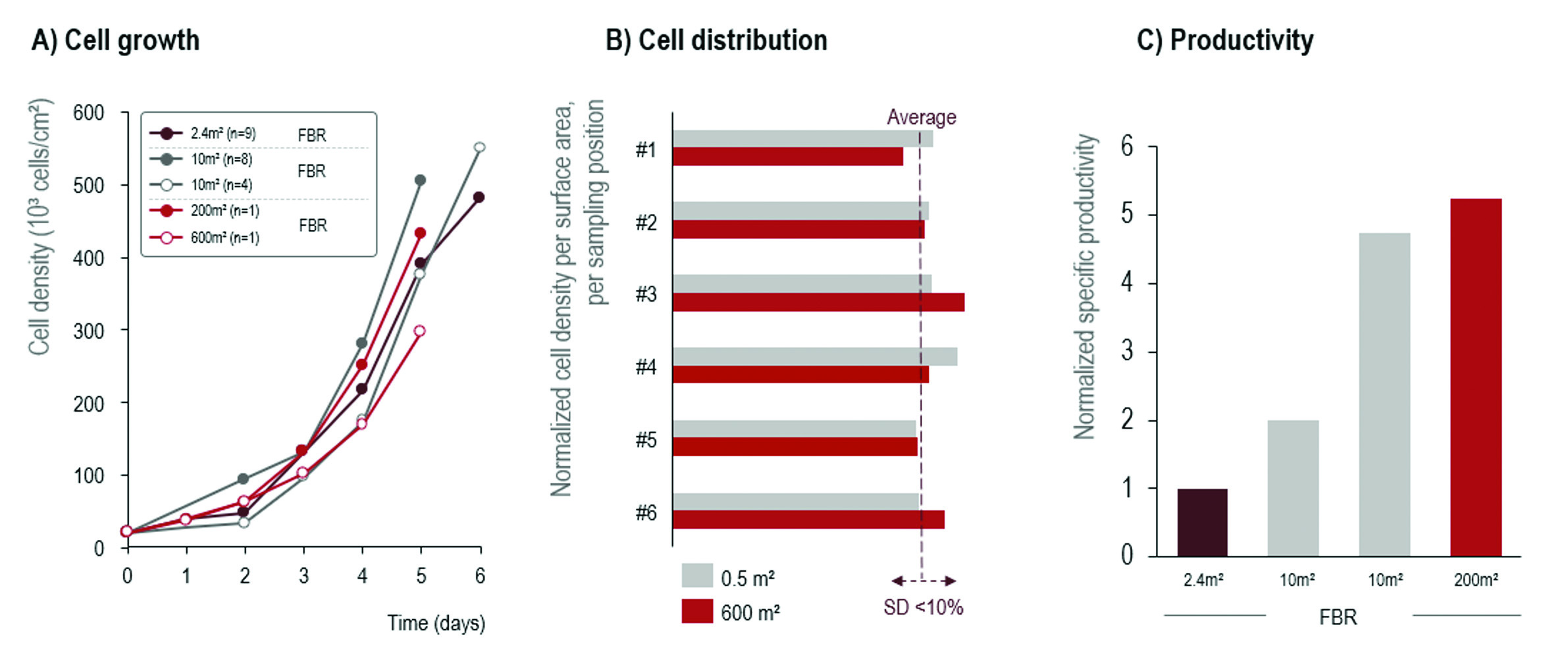
Figure 3. Cell entrapment, growth, and productivity across structured-fixed-bed bioreactors of different scales | Sources: A,B) Univercells Technologies (data with HEK293 cells), 2019-2023; C) Exothera & Reithera, 2023 (data with Adenovirus production in HEK293 cells).
High productivity, higher quality
Bioreactors with structured, spiral-wound fixed-bed architecture typically enable the production of higher-quality viral vectors.16 Physical entrapment of cells within the fixed-bed matrix prevents cell debris from accumulating in the harvest, resulting in cleaner supernatants. Other impurities including host cell proteins (HCP) and residual host-cell DNA (HC-DNA) are also retained in the bed, further reducing harvest impurity loads.
As can be seen in Figure 4, HCP and HC-DNA levels have been shown to be reduced by five- and ten-fold, respectively, compared to typical suspension-based processes. For AAV vectors, a three-fold increase in full-to-empty capsid ratios is also achieved (Figure 4C), addressing a longstanding industry challenge for this critical quality attribute. These improvements simplify downstream processing by reducing the burden on chromatography and filtration, lowering reagent consumption, and supporting regulatory compliance.
Measurable COGs reduction
Productivity is a key driver of viral vector manufacturing economics, directly affecting batch output, facility utilization, and cost per dose. The productivity and quality gains achieved across scales with structured, spiral-wound fixed-bed bioreactors have been associated with substantial reductions in COGs.
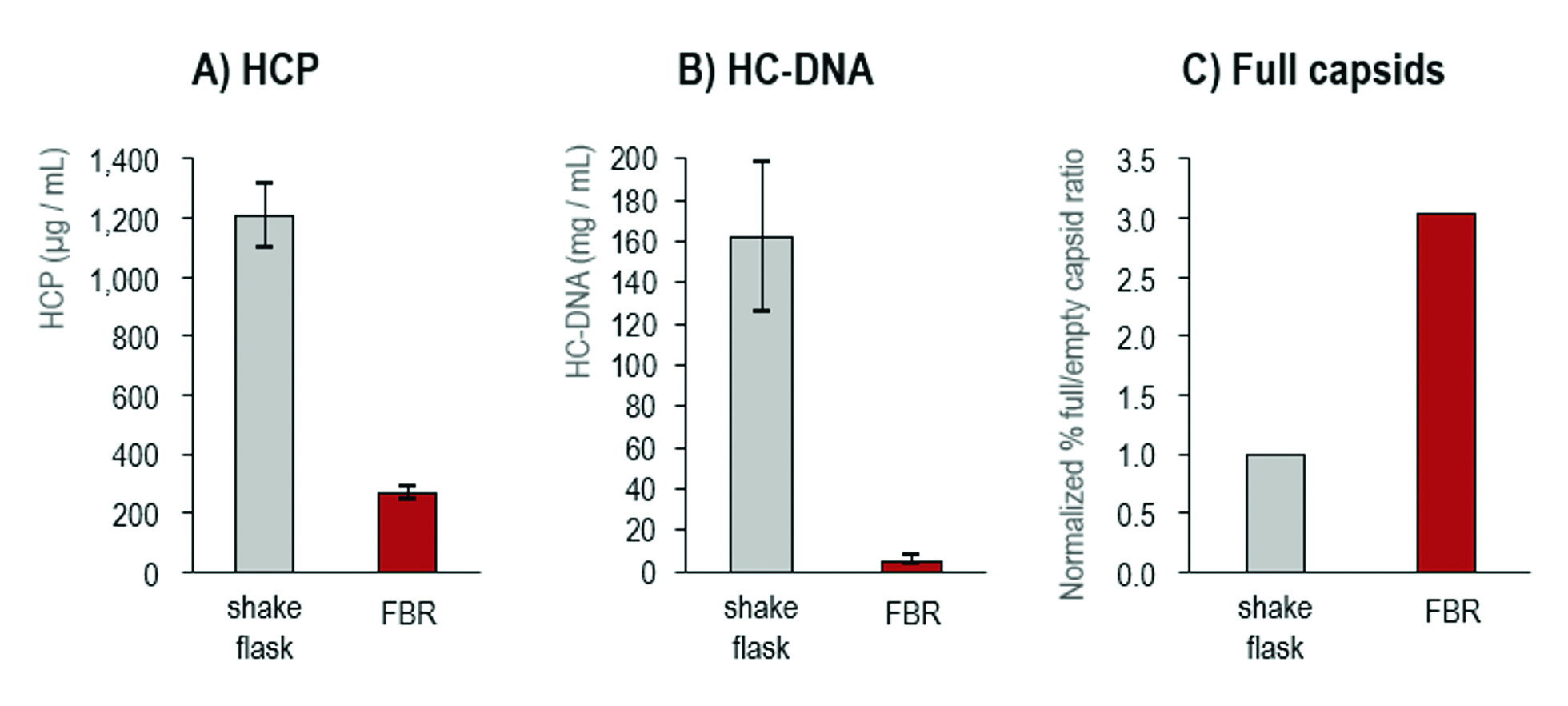
Figure 4. Increased product purity observed with a structured fixed-bed bioreactor | Source: Chatel et. al., Univercells Technologies, 2023.
Using an internally developed techno-economic model, the author estimates up to a 57% reduction in drug substance production costs compared with other adherent cell culture systems for AAV- and LV-based therapeutics (Figure 5).16
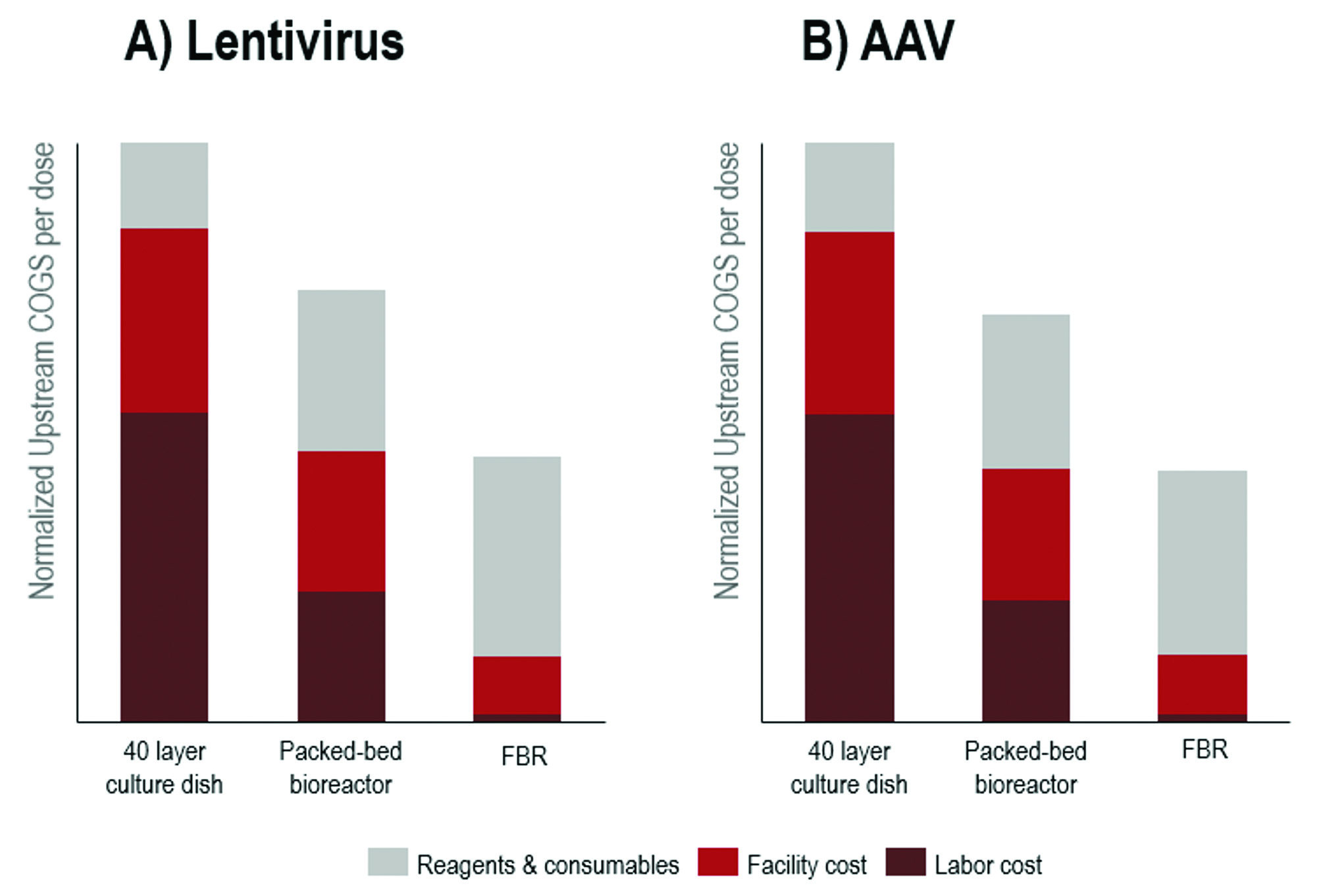
Figure 5. COGs modeling output comparing scale-X bioreactors to alternative systems | Source: Univercells Technologies cost model (2025). Upstream COGs, including capital and operating expenses, are normalized to the scale-X bioreactor. Assumptions: 2000 doses/year, 1014 vg/dose (AAV) or 109 TU/dose (LV).
The substantially higher specific productivities achieved allow for production of more viral vector products per unit of input material, time, and space. The compact footprint enables denser bioproduction within smaller cleanroom spaces, reducing capital investment and facility overhead. There is also much less consumption of plasticware, media, and reagents compared to scaling out of multi-tray cultures, reducing resource use and waste generation. Leveraging the benefits of closed and automated systems, manual operations are minimized, resulting in lower labor costs and reduced risk of contamination or error. The ability to achieve meaningful COGS savings has been confirmed by third party calculations.17
Conclusion
While gene therapies have demonstrated transformative clinical benefit, their adoption remains limited by manufacturing challenges and cost. Structured fixed-bed bioreactors address these barriers by enabling scalable, high-productivity adherent processes that improve yields, reduce COGs, and support more efficient viral vector production for both in vivo and ex vivo applications. As manufacturing becomes more efficient and economically sustainable, these technologies have the potential to improve commercial viability and expand patient access.
References
- Approved Cellular and Gene Therapy Products. (2026 Aug). U.S. FDA. [accessed 8/6/26]
- CAT quarterly highlights and approved ATMPs. (2025 Dec). European Medicine Agency.
- Alliance for Regenerative Medicine. (2026 Feb). Q4 2025 Sector Snapshot.
- Barrie, R. (2025 Dec). Cell and gene therapy investment strategy pivots as funding dries up. Yahoo Finance.
- Sangamo shares plunge after Pfizer ends hemophilia A gene therapy deal. (2024 Dec). Reuters.
- Once valued at $10B, bluebird bio sold to private equity firms for $29M. (2025 Feb). Fierce Pharma.
- Smith, et al. (2018). Overcoming Bottlenecks in AAV Manufacturing for Gene Therapy. Cell Gene Therapy Insights 4(8), 815-827.
- McCarron, et al. (2017). Scale-up of lentiviral vectors for gene therapy. Cell Gene Therapy Insights 3(9), 719-729.
- Leinonen, et al. (2020). Benchmarking of Scale-X Bioreactor System in Lentiviral and Adenoviral Vector Production. Human Gene Therapy 31, 376-384.
- Siedler, et al. (2023). Lentivirus production study in the scale-X™ fixed-bed bioreactor. [application note]. Univercells Technologies.
- Carvalho, et al. (2021). Suspension-based viral vector production in scale-X™ fixed-bed bioreactor: Shake flask process transferred in a scale-X hydro fixed-bed bioreactor for Adenovirus production with HEK293 cells adapted to suspension. [application note]. Univercells Technologies, Exothera and ReiThera.
- Toback, et al. (2021). scale-X™ fixed-bed bioreactor for vaccine manufacturing: Process transfer of four viral vaccine candidates using WI-38, Vero and CEF substrates. [application note]. Univercells Technologies and Merck.
- Chatel, et al. (2021). Scalable Rubella production in scale-X™ bioreactor with MRC-5 cells. [application note]. Univercells Technologies and Batavia Biosciences.
- Huang, et al. (2023). Scalable, continuous, and high-capacity production of hMSC-derived extracellular vesicles in the scale-X™ hydro fixed-bed bioreactor. [application note]. Univercells Technologies and RoosterBio.
- Chatel, et al. (2023). The benefits of growing serum-free, suspension HEK293 cells in the scale-X™ fixed-bed bioreactor. [application note]. Univercells Technologies.
- Stamatis, et al. (2023). Can novel bioreactors improve the cost of goods of viral vectors? Cell & Gene Therapy Insights 9(5), 687-704.
- Robert, et al. (2022). Scalable seed train intensification and automation with the scale-X™ bioreactor. [application note]. Univercells Technologies.
Subscribe to our e-Newsletters
Stay up to date with news, articles and insights relevant to cell and gene therapy development and manufacturing. Plus, get special offers from Cell & Gene Therapy Review delivered right to your inbox!
Sign up now!