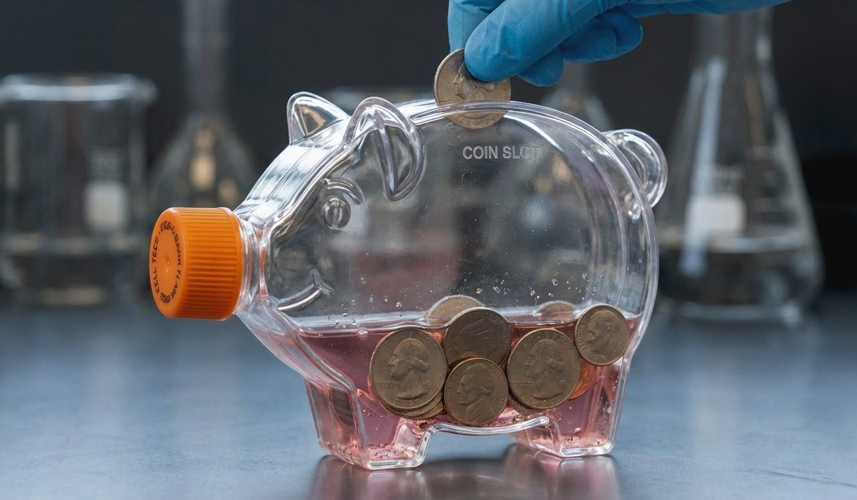
The economics of cell therapy manufacturing remain one of the field’s central challenges. The cost of a single CAR-T dose can exceed $400,0001 and the field is actively looking for levers to bring that number down.
Most of the conversation lands on automation, facility design and scale-up. These matter. But some of the most actionable levers may sit earlier in the process than the industry has been looking.
The role of cytokines in development
Cytokines are signaling proteins that regulate cell behavior. In cell therapy manufacturing, they are added to culture media to recreate the signals cells normally receive inside the body — cues that tell them to grow, activate or differentiate. Interleukin-2 (IL-2) is one of the most familiar examples, acting as the trigger for T-cell proliferation. Without it, T cells will not expand in culture regardless of what else is present in the media.
But cytokines do more than drive cell growth. The specific cytokines used, their concentrations, and the timing of their introduction during culture shape the phenotype of the resulting cell population. These conditions determine whether cells are durable and capable of persisting in the body or become exhausted and short-lived.
This distinction has direct implications for manufacturing economics. The quality of the cells ultimately determines how many cells need to be manufactured in the first place, yet cytokine strategy has historically received far less attention than other process cost drivers.
That relationship becomes clearer when looking at how the field’s thinking about cell dose has evolved.
The shift from quantity to quality
For much of cell therapy’s history, manufacturing was optimized for volume. Dose targets were often set in the hundreds of millions of cells per kilogram of body weight, and manufacturing protocols were designed to reliably reach those numbers.
Over time, the field began to understand an important biological constraint. Cells that are expanded outside of the body tend to age and decline as they proliferate.2 The longer they remain in culture, the further they drift from a naive phenotype characterized by strong proliferative capacity, persistence, and durability, toward a terminally differentiated state. These exhausted cells can still kill tumor cells in the short term, but they lack the ability to persist and continue dividing once inside the patient.
This realization has shifted manufacturing thinking. Researchers increasingly recognize that smaller numbers of higher quality cells can outperform much larger numbers of exhausted ones. If a lower dose of well-preserved naive phenotype T cells can achieve the same therapeutic effect, the implications for manufacturing are significant. The number of cells that need to be produced changes, and with it the time, materials and cost required to manufacture each therapy.
The cytokine lever
Different cytokines produce different phenotypic outcomes during cell expansion. IL-2 drives robust proliferation but can also accelerate differentiation toward exhaustion. Other cytokines, such as IL-7 and IL-15, help preserve a more naive phenotype and improve persistence once cells are returned to the patient. In other words, cytokines influence both the number of cells produced, and the therapeutic quality of those cells.
Cytokine quality introduces another variable. These proteins are manufactured through complex biological processes and purified through multiple steps, and quality can vary between suppliers and even between lots. When cytokine inputs vary, the resulting cells can vary as well.
In a manufacturing environment where a single batch failure can cost hundreds of thousands of dollars, variability in raw materials becomes a financial risk rather than a minor process nuisance. Yet cytokines are often sourced and handled as if they were routine reagents.
Beyond their biological role, cytokines also introduce practical challenges in how they are supplied and integrated into manufacturing workflows.
The cost lever hiding in the packaging
Another aspect of the cytokine conversation is rarely discussed when developers talk about the cost of goods. Most cytokines are supplied in formats such as screw-cap vials, stoppered vessels, or small bags with significant dead volume — all incompatible with fully closed processing. That means manufacturers must handle cytokines in Grade A clean room environments.
Grade A is the highest classification of sterile manufacturing and carries a significant operational burden. These environments require isolators, controlled airlocks, full gowning, high airflow and HVAC energy costs, extensive monitoring, and specialized personnel. Industry estimates suggest operating costs can be up to eight times higher than Grade C spaces.3 While necessary when materials must be exposed to the environment, they are also among the most expensive areas of a biologics facility to operate.
The logic of closed-system manufacturing is straightforward. If every starting material can be welded directly into the manufacturing line without being opened, contamination risk is controlled at the container rather than the environment. That makes it possible to move many operations out of Grade A clean rooms and into lower classification environments such as Grade C.
The shift from Grade A to Grade C is not incremental. It changes the entire cost structure of the process. Grade C environments require less infrastructure, less intensive monitoring, reduced gowning requirements, and lower personnel burden. Over time, those differences compound across every batch run through the facility.
That difference matters. Grade A environments are expensive to operate, and sterility failures are more common than most would like to admit. A single contamination event can mean hundreds of thousands of dollars in lost product and delayed treatment for patients. At commercial scale, even small reductions in failure rates can materially change the cost of manufacturing.
The industry has invested heavily in closing manufacturing steps through closed bioreactors, weldable tubing, and closed fill-and-finish systems. But if a raw material arrives in packaging that requires opening, the process is no longer truly closed and exposure has happened before manufacturing even begins.
The field is ready for recalibration
None of this requires reinventing how cell therapies are manufactured. The core processes already exist. What is changing is how carefully manufacturers are beginning to think about the inputs that shape those processes.
The science around cytokine combinations and cell phenotype is advancing quickly. Researchers now have a much clearer understanding of how expansion conditions influence cell quality and long-term persistence. As that knowledge improves, manufacturers will have more control over how many cells need to be produced and how those cells perform once they reach the patient.
The supply chain will also need to evolve. Cytokine packaging designed for closed-system compatibility is ultimately an engineering challenge. If raw materials can arrive in formats that integrate directly into closed manufacturing workflows, many of the cost and contamination risks that exist today become far easier to manage.
Some variability will always exist in cell therapy manufacturing. These are living systems, and biology rarely behaves perfectly. The opportunity is to reduce variability where it can be controlled. Cytokine strategy is one such lever, yet it has received far less attention than other parts of the process. For an industry focused on improving access and affordability, it warrants closer focus.
References
- Wu, J., et. al. (2024). Medicare Utilization and Cost Trends for CAR-T Cell Therapies in the Treatment of Large B-Cell Lymphoma. Transplant and Cell Ther. 30(2), S406-S407.
- Wherry, J. & Kurachi, M. (2015). Molecular and cellular insights into T cell exhaustion. Nature Reviews. Immunology. 15(8), 486-499.
- Whitford, W., et. al. (2023, March). Environmental Sustainability in Biopharma Facility Design. Pharma Engineering.
Subscribe to our e-Newsletters
Stay up to date with news, articles and insights relevant to cell and gene therapy development and manufacturing. Plus, get special offers from Cell & Gene Therapy Review delivered right to your inbox!
Sign up now!