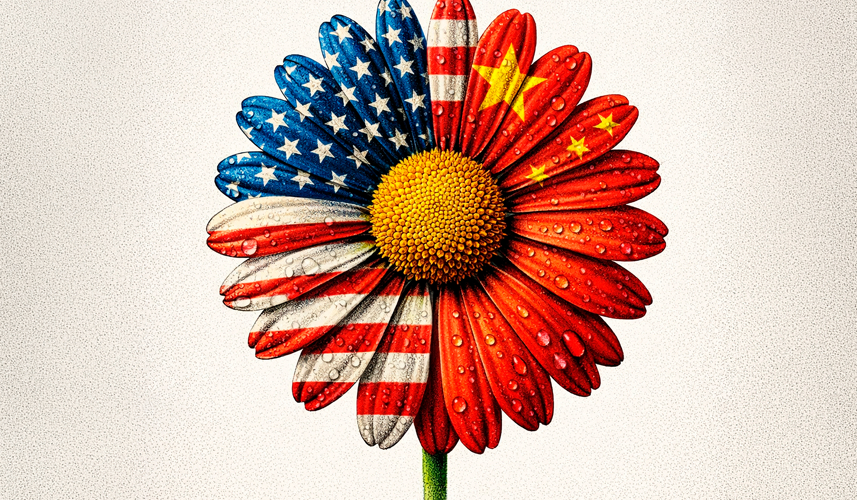
The United States and China — home to the world’s two largest pharma markets — have long maintained a complicated relationship.
In recent years, policymakers in particular have grown fond of using war metaphors to signal the high stakes nature of the rivalry. Whether framed as a trade war, a tech war, an AI war, or a biotech war, the dynamic between the two global superpowers is frequently cast as something to be won.
“We face a national security threat right now...it’s not one of missiles and tanks. It’s of laboratories and lifesaving medications. It’s a war right now with China on American innovation and biotechnology,” said Chris Klomp, Medicare director and chief counselor of the U.S. Department of Health and Human Services, during a recent Conservative Political Action Conference panel.1
Over the past decade, the Chinese government, guided by industry input, has poured massive investments into building up the country’s biotech sector. What began as an effort to produce biosimilars of Western drugs has evolved into a sophisticated ecosystem with standout capabilities in research and development. More recently, the focus has shifted toward innovative modalities such as cell and gene therapies.
While competition has historically driven progress in the pharma space, often forcing the industry to come up with faster, more affordable and more efficient solutions, the push to declare ‘victory’ risks oversimplifying a deeply interdependent field. Many cell and gene therapy industry insiders argue that framing biotech as a geopolitical war misunderstands the realities of drug development in advanced therapies, where factors such as speed and cost can affect pipelines and in some cases, make or break an entire company.
“The framing is misguided,” says Anthony Davies, Ph.D., founder and CEO of Dark Horse Consulting Group. “There’s quite a bit of snobbery going on here where people in the West still think China can’t possibly be as good as us. And having spent a lot of time there in the last 12 months, I can say not only are they as good as us, but in many cases they’re better.”
This dynamic is particularly evident in early-stage R&D, where regulatory agility, cost-efficient clinical trial execution and a deep, concentrated patient pool — backed by strong government funding and policy support — have propelled China ahead. According to a forecast from Frontiers in Science and Innovation Policy,2 China’s public spending on science research is likely to overtake that of the U.S. in the next two to three years. A GlobalData analysis found that China launched roughly twice as many CGT trials as the U.S. in 2024.3
That strength has not gone unnoticed by pharma multinationals. Earlier this year, AstraZeneca announced plans to establish a cell therapy manufacturing and innovation center in Shanghai as part of a $15 billion investment in China.4 The company later acquired EsoBiotec in a potential $1 billion deal announced just months after the Belgian biotech’s in vivo CAR-T trial in Wuhan delivered a breakthrough clinical response. This past March, Novartis announced a $480 million investment in its China operations, more than half of which will be used to expand its Shanghai campus — now its third-largest R&D center globally — with a focus on leveraging China’s efficiency in early-stage clinical development.5
Looking to China for innovation is no longer a niche strategy but a defining industry trend. One-third of all global pharma licensing spending in 2025 involved drugs from China.6 The most high profile example in the CGT space is Johnson & Johnson’s $350 million deal in 2017 to license what would later become the blockbuster CAR-T cell therapy Carvykti from Legend Biotech — a company founded in Nanjing, China. Novartis also struck a deal with Legend, paying $100 million upfront in 2023 for a selection of CAR-T candidates.
As these tie-ups deepen, the U.S. faces an increasingly uncomfortable question: What if the fastest path to developing innovative cell and gene therapies lies outside its borders?
“The East–West connection is a very delicate balance,” says Claudia Lin, Ph.D., executive vice president, Pharmatech Associates. “The industry needs to understand China’s strengths and weaknesses, and how to leverage those strengths while navigating weaknesses.”
Rather than viewing it as a battle to be won, developers who treat China’s rise as a strategic opportunity — both for partnership and as a wakeup call to address inefficiencies in Western systems — will be best positioned to take home the ultimate prize: bringing lifesaving treatments to more patients.
China’s fight to clean up its reputation
China, broadly known as the ‘world’s factory,’ accounted for roughly 28% of global manufacturing output in 2024.7
The pharma industry has not been immune to this inertia. Beginning in the late 1990s — and accelerating after China joined the World Trade Organization in 2001 — production of small molecule APIs and generics steadily shifted to China.8 In some categories, such as generic antibiotics, China now controls roughly 90% of the global supply of key inputs needed to make finished drugs9 — a statistic that has since become a focal point in U.S. reshoring debates.
Yet even as U.S. policymakers warn about overreliance, cost savings still have pull.
“There’s no doubt that if you manufacture your drug in China, it’s cheaper,” says Davies. “Mostly everything made in China is cheaper.”
According to Davies, that advantage is structural. Labor costs in China remain lower across both manual and highly skilled roles, reflecting broader differences in cost of living. Government incentives — from tax relief to infrastructure support — further compress expenses, echoing policies that once drew pharmaceutical manufacturing to Ireland and Puerto Rico. And access to locally-sourced raw materials, often at roughly half the cost of U.S. equivalents, compounds the savings.
While cost has made China an attractive partner, questions of quality have long been the counterweight. One of the principal arguments behind the U.S. reshoring movement is that sourcing critical drugs and ingredients from China could expose Americans to contaminated, counterfeit or unsafe medicines.
China’s reputation for poor quality is not without precedent. In 2007, the former head of its drug regulator was executed for corruption tied to lax safety standards.10 In 2008, adulterated heparin from China, used as a blood thinner, caused hundreds of severe reactions and over 100 deaths.11 In 2018, contaminated Chinese-made APIs triggered global recalls of valsartan, used to treat high blood pressure and heart failure, across more than 20 countries.12
According to Lin, these quality gaps stemmed largely from “the history of the industry in China, which prioritized speed, scale and low cost.”
Working in China at the time, Lin witnessed the lack of systems and standards, especially with respect to CMC and quality, which led her to found the first biologics-only quality contract services organization in Asia.
What’s changed since then is not just incremental improvement, but a deliberate, state-backed effort to rebuild the regulatory system — and with it, global trust. In 2011 — and again in 2016 — the Chinese government launched five-year plans aimed at shifting the economy from a low-cost goods exporter to one capable of innovation. Biotech became a national strategic priority, backed by significant public and private investment.13 Given past quality issues, reforming the drug regulatory system became a central focus.
Lin watched the National Medical Products Administration (NMPA) evolve rapidly, modeling China’s regulatory system after the U.S. FDA. In 2017, China joined the International Council for Harmonisation (ICH), aligning its standards more closely with global norms.
“When China became a regular member of ICH, that was a defining moment for the Chinese drug regulatory agency. It came in the midst of the country deciding to revolutionize how they regulate drugs,” says Lin.
For developers, this evolution forces a reassessment of long-held assumptions. If China can simultaneously improve regulatory rigor while maintaining cost advantages, the traditional risks that underpin reshoring arguments begin to erode.
Numerous Western CGT developers are already integrated into China’s manufacturing ecosystem at the clinical stage, relying on China-based CROs and CDMOs for early production. The shift has not yet fully extended to U.S. commercial supply, but the trajectory is becoming harder to ignore.
As more companies move early development to China, a strategic dilemma emerges — one that has less to do with ‘winning’ and more to do with trade-offs. If a company conducts early clinical trials in China because it’s faster and more affordable, does it keep manufacturing there and contend with global regulatory and shipping complexities, or rebuild manufacturing elsewhere at higher costs?
“It’s a genuine conundrum,” says Davies. “Eventually you’re going to have to grapple with this decision.”
China’s CDMO market is still relatively new, but the cell and gene therapy segment is expanding rapidly, with projected annual growth of roughly 24% through 2033.14 As more capacity comes online, developers could be increasingly tempted to take advantage of lower costs.
“Manufacturing has tremendous inertia. If your manufacturing is already humming along at one of the many high-tier CDMOs in China, you might want to just leave it there and deal with the import/export issues,” says Davies.
At the same time, domestic biotech companies in China are beginning to demonstrate that they can independently develop and produce quality advanced therapies — and price them in ways that challenge Western models.
In 2025, Belief BioMed secured NMPA approval for BBM-H901, the first domestically developed hemophilia B gene therapy in China, and opted to manufacture the therapy in-house at its Shanghai facility.15 Mindful of China’s reimbursement constraints, Belief took purposeful steps to design a more affordable gene therapy. The company optimized vector engineering, production processes and cell lines to improve efficiency and reduce waste. The result was a therapy priced at roughly $388,70016 — a fraction of the $3.5 million price tag of CSL Behring’s Hemgenix in the U.S.
While the pricing contrast is stark, it reflects a broader shift in which China is trying to shed its reputation as a cheap manufacturing source, positioning the country as an innovative new drug partner — or fierce competitor — depending on how companies choose to engage.
Speed as a battle plan
Arguably, China’s most consequential reform came in 2015, when the State Council introduced sweeping policies to modernize drug and device regulation. These changes clarified clinical development pathways and, crucially, created an alternative route to first-in-human (FIH) studies. In addition to the traditional IND pathway, the policy treats experimental CGTs as medical technologies regulated by the National Health Commission, allowing qualified institutions and investigators to initiate their own trials without a sponsoring pharmaceutical company or going through NMPA.
Investigator-initiated trials (IITs) enable researchers to efficiently generate early data in terms of safety — and sometimes in CGT, efficacy — helping guide subsequent development decisions.
“The decision to allow a dual path to first-in-human studies was a very smart move by NMPA,” says Lin. “China has long been a destination for global clinical trials. The government leveraged that in a very methodic way to allow China to catch up with the West in advanced therapies.”
If China’s regulatory reforms were designed to balance quality with efficiency, IITs are where that strategy fully materializes.
As the U.S. CGT sector grapples with shrinking capital, cuts to NIH funding and government grants, and regulatory uncertainty amid FDA turnover, launching new trials has become increasingly difficult. China, meanwhile, has accelerated. From 2019 to 2024, the number of CGT trials initiated in China surged, ultimately doubling U.S. output.17 Notably, IITs outnumber IND-based cell therapy studies by roughly 14 to 1.18
“If you look at gene therapy company portfolio presentations in China and put their pipelines up against a comparable Western company, the Chinese companies are about half a phase ahead of us,” says Davies. “This gap can be closed but U.S. companies aren’t going to catch up by continuing to do first-in-human studies in the slowest possible jurisdiction.”
This is where the logic of ‘competition’ begins to unravel. Developers are not choosing where to run trials based on national allegiance, but on which system allows them to generate meaningful human data fastest — because in biotech, that data is currency.
Davies is an enthusiastic supporter of ‘regulatory arbitrage.’ The term was popularized decades ago in the banking industry, where it often carried a controversial connotation, referring to firms exploiting loopholes to sidestep unfavorable regulations. In the pharmaceutical context, however, the concept is applied differently: Developers strategically position clinical programs in jurisdictions with regulatory frameworks best suited to a therapy’s stage of development, rather than to evade oversight.
“At the end of the day, we need commercial approvals. And in my opinion, starting the journey with an IIT in China is currently by far the fastest way of doing that,” says Davies.
Therapies with early human data are significantly more likely to attract funding, partnerships or acquisition interest. Without it, even promising programs can stall.
EsoBiotec offers a clear illustration. In December 2024, the startup initiated its FIH IIT in a hospital in Wuhan. Just 28 days later, the company shared preliminary data from one patient with relapsed/refractory multiple myeloma — after a single dose of the company’s in vivo CAR-T, ESO-T01, no cancer cells were detected in the patient’s bone marrow.19
“We were able to enroll the first nine multiple myeloma patients within three months and generate initial clinical data validating in vivo cell reprogramming in less than two months. Importantly, the clinical teams in China were highly experienced and managed patients very effectively, which contributed to the overall quality and interpretability of the data,” says EsoBiotec founder and CEO, Jean-Pierre Latere, Ph.D.
By utilizing an IIT, EsoBiotec was able to succeed where many companies had failed, reporting positive clinical data on in vivo CAR-T therapy. In March 2025, AstraZeneca acquired EsoBiotec for $425 million upfront, with up to another $575 million tied to future development and regulatory milestones.
“The data proved critical in our discussions with investors as we were preparing for our Series A. We were also surprised by the level of interest from pharmaceutical companies, particularly AstraZeneca’s strategic vision, which ultimately led to the acquisition,” says Latere.
In July 2025, EsoBiotec published additional data from the IIT.20 Four out of the five treated adult patients with relapsed/refractory multiple myeloma achieved objective responses, including three stringent complete responses.
IITs have the added benefit of cutting through the the bureaucratic friction that often accompanies drug regulation.
“It’s not like China has magic in the tap water — the NMPA can be just as inefficient as our FDA,” says Davies “But with IITs, your CMC, preclinical and clinical reviews often happen within the same building. It’s the equivalent of MD Anderson reviewing your entire submission without needing to navigate the FDA’s bureaucratic, time-consuming process.”
In drug development, time is capital.
“We just did a timeline analysis for a client currently in late stage preclinical, looking to do first-in-human ASAP. If you roll up the Gantt chart [project management tool], they’re about 18 months away from first treatment in the U.S. and about nine months away in China,” says Davies. “That nine months can literally be life or death for a biotech company.”
That reality is well understood by EsoBiotec, a small biotech founded in 2021 from research at KU Leuven to make CAR-T therapies more affordable and accessible. With roughly $24 million raised prior to its acquisition, the company operated lean, forcing careful, strategic decision-making from the outset.
“EsoBiotec’s decision to conduct an IIT was primarily driven by speed, cost efficiency and the depth of CAR-T clinical experience available in China. Compared to running a trial in Europe, we estimate that we gained close to 18 months in development timelines,” says Latere.
Regulation as a battleground
Regulatory arbitrage is not intended to save time or money at the expense of safety or quality regulations. The efficiency of IITs doesn’t come from lower standards, but rather better optimized regulatory paths.
China’s IITs have a compliance management system overseen by the National Health Commission. The trials have been concentrated in 3A hospitals, which are considered gold standard medical institutions, offering the broadest range of services, highly specialized health care teams and the strongest overall capabilities.
“3A hospitals offer world-class clinical care. They are in no way inferior to U.S. hospitals or hospitals anywhere in the world,” says Davies. “And the reviewers at these hospitals are incredibly talented and ambitious investigators. They are personally liable for these trials, so they aren’t going to put anything in patients that has dodgy CMC or preclinical data.”
China’s State Council Order No. 818,21 which takes effect on May 1, 2026, will establish a national regulatory framework governing IITs for cell and gene therapies, providing additional regulatory clarity, and elevating data integrity standards to be more aligned with international clinical governance norms.22
Clinical data generated from IITs doesn’t necessarily need to be included in a regulatory submission; it can be used to inform important early decisions such as dosing, infusion rates, or formulation adjustments. But the elephant in the room is whether regulators like the FDA — especially amid a geopolitical showdown — will accept China-generated data without bias if it’s submitted as part of an IND package.
According to Lin, there is still lingering skepticism from the agency. “With IND reviews, the FDA tends to accept certain data at face value. But with submissions from China, the agency looks more closely — not just at the data, but how it was generated,” she says. “Take the cell bank, one of the most critical raw materials in many CGTs. In the U.S., it’s typically characterized by a well-known, highly credible third-party lab. In China, however, the testing might be done by a lab the FDA reviewer isn’t familiar with, which raises additional questions about data reliability.”
In practice, these concerns — whether warranted or not — haven’t deterred Western developers. Instead, they’ve become a standard part of the evaluation process when turning to China to generate early clinical data. According to Latere, EsoBiotec was selective about its Chinese partnerships.
“We conducted on-the-ground due diligence, visiting several potential partners directly. In parallel, we built a network of China-based consultants and legal experts to help us assess capabilities, navigate the local environment, and mitigate risks,” says Latere.
In late 2023, Dark Horse, anticipating the rise of CGT development in the Asia Pacific region, opened an office in Singapore. Additionally, the company recently signed a memorandum of understanding with Porton Advanced, a Suzhou, China-based CDMO. The organizations will partner to offer clients a cost-effective and rapid pathway into clinical-stage manufacturing, with particular emphasis on enabling IITs.
“We get a lot of inquiries from companies that want to run an IIT, but don’t know how to get started. Our goal is to provide a well-lit road to guide clients down that route,” says Davies.
But ultimately, the decision to move early clinical testing to China should be made on a company-by-company, product-by-product basis.
“This is a strategic decision that should not be taken lightly. Companies need to carefully evaluate both the advantages and the constraints based on their specific technology and product,” says Latere. “It is essential to spend time in China, engage with local experts, and understand the clinical and operational realities. The approach is not suitable for every non-China biotech.”
Competing playbooks
If IITs are giving China a structural edge in early-stage CGT development, an obvious question follows: Why not simply replicate the model in the U.S.?
Some in the field have suggested exactly that. CAR-T cell therapy pioneer Dr. Carl June raised the issue during an FDA cell and gene therapy roundtable back in June 2025,23 proposing that the U.S. adopt a two-tier model similar to what China offers, where first-in-human exploratory trials for bespoke therapies can move forward with Institutional Review Board clearance.
“Why are researchers increasingly taking trials overseas?” he asked. “Simply put, the U.S. process has become too slow, costly and inflexible while other countries make it easier to innovate.”
That concern appears to also be gaining traction within the FDA itself. Commissioner Marty Makary has repeatedly warned that the U.S. risks falling behind China in early-stage drug development, calling for changes to streamline how clinical trials are initiated.24 While addressing FDA staffers in April, Makary called China “the biggest threat that we have in the drug space,” emphasizing the need to “reevaluate what we are doing that makes us non-competitive.”25
But rather than adopting China’s IIT framework outright, the FDA is signaling a different approach — one focused on reducing bottlenecks within its existing system. In its 2027 budget proposal,26 the agency outlined a new risk-based, expedited IND pathway for certain phase 1 trials, designed to eliminate duplicative requirements while maintaining safety and ethical standards. “This policy would be particularly important for smaller biotechnology firms that face greater barriers to entry under the current paradigm, which has fueled the increase in early stage preclinical and phase 1 activity in China and Australia,” said the agency.
While details remain limited, the direction is clear: Reform, not replication — an idea that has been embraced by industry groups, such as the Alliance for Regenerative Medicine (ARM).
“Maintaining U.S. leadership in CGT does not require adopting another country’s model; it requires improving the U.S. system so that innovation is anchored domestically,” says an ARM spokesperson.
That improvement, the group argues, goes beyond regulation alone. Just as importantly, it requires making the U.S. a more competitive environment for early-stage research through targeted incentives, infrastructure investment and broader ecosystem support.
Not all proposed solutions have focused on incentives. In an October 2025 workshop hosted by the National Academies of Sciences, Engineering, and Medicine,27 Makary discussed the FDA’s ‘America-first agenda’ suggesting a more punitive idea: higher user fees for trials conducted outside the U.S. The concept surfaced in PDUFA reauthorization discussions,28 though it met resistance from industry groups, which argued that penalties are unlikely to reverse the underlying economic and operational drivers pushing trials overseas.
The U.S. response to China’s regulatory strategy will hold particular importance in the CGT space — a landscape where innovation is shaped by the policies, funding and systems that enable it.
The real winners
Political rhetoric has increasingly painted biotech as a zero-sum contest — one the U.S. must win at any cost. But to the industry, that framing is starting to look less like strategy and more like distraction.
During a China CDMO panel at INTERPHEX 2026, Gil Roth, president of the Pharma & Biopharma Outsourcing Association, questioned why U.S. policy is so often focused on constraining China’s rise — citing measures like the BIOSECURE Act — rather than accelerating domestic innovation.
The reality, as industry leaders increasingly acknowledge, is that the question is not who is ahead or behind. It’s how to navigate a landscape where advantages may be distributed across geographies.
And that distribution may not be static. Claudia Lin warns that China’s cost advantages are unlikely to last indefinitely, and that a Western strategy focused on seeking out speed and savings from China may prove short-sighted. As demand for China-origin innovation grows, so too will its price — a shift that could force companies to rethink how and where they build their pipelines. At the same time, other countries are charting their own courses, introducing new players into the race.
“While the geopolitical tension between U.S. and China grows, European countries are waking up to the fact that they need to have their own strategy and are busy investing in domestic biotech infrastructure,” says Lin. “Countries like Spain and France are watching basic research in the U.S. lose funding and realizing they might be able to recruit some talent to help build up their R&D infrastructure.”
Still, others — Jean-Pierre Latere among them — see a more durable role for China in the global ecosystem. “China has developed a highly dynamic biotech ecosystem with strong scientific and clinical capabilities. It should be considered as a long-term component of global drug development strategies, rather than just a short-term tactical option,” says Latere.
Taken together, these perspectives point to a future that looks less like a war and more like an integrated network — one where innovation is shaped by how effectively companies can operate across systems, not within a single one.
Because in the end, the outcome that matters most is not which country ‘wins,’ but whether patients do. As Roth put it, “Yes, there’s competition — but there’s also an understanding that all these drugs are meant to improve human health.”
References
- CPAC 2026 convention. (2026 March). Medicare and Medicaid [panel presentation]
- Deighton, B. (2026 March). China could be the world’s biggest public funder of science within two years. Nature.
- Beaney, A. (2025 Aug). China takes lead in CGT trials amid Western funding challenges. Clinical Trials Arena.
- AstraZeneca plans to invest $15 billion in China through 2030 to pioneer the next-generation of innovative medicines. (2026 Jan 26). AstraZeneca. [press release]
- Novartis continues to increase its investment in China to support high-quality development of pharmaceutical innovation. (2026 Mar 22). Novartis Group. [press release]
- China Biotech Outbound Licensing Tracker: The $136 Billion Deal Wave. (2026 Feb). Vision Lifesciences. [accessed: April 15 2026]
- China’s manufacturing sector reaches second global tier. (2025 Dec). China Voices. Xinhua.
- Daemmrich, A. (2017) Pharmaceutical Manufacturing in America: A Brief History. American Institute of the History of Pharmacy 59(3).
- Gibson, R. (2021 April). Opinion: China has cornered the market on antibiotics, so the U.S. must rebuild its manufacturing capacity. MarketWatch.
- Watts, J. (2007 Jul). China executes former food safety chief over fake medicines. The Guardian.
- Liu, H., et. al. (2009, Jan). Lessons learned from the contamination of heparin. Nat Prod Rep. 26(3). 313–321.
- Parrish, M. (2019 Dec). The recall effect. Pharma Manufacturing.
- Lin, C. (2026 Feb). Partnership with Chinese biotech companies: Understand the pros and cons by understanding the journey. BioXconomy.
- China Cell And Gene Therapy Cdmo Market Size & Outlook.(2024). Grand View Horizon.[accessed April 15, 2026]
- Whitlock, J. (2026 Mar). Multimillion-dollar gene therapies weren’t supposed to face competition. China has other plans. Endpoints.
- China Explores Weight-Based Pricing for First Domestic Hemophilia B Gene Therapy. (2025 Jul). Navlin Daily.
- Beaney, A. (2025 Aug). China takes lead in CGT trials amid Western funding challenges. Clinical Trials Arena.
- Xu, L., et. al. (2026 Apr). The role of investigator-initiated trials in advancing cell and gene therapy under China’s dual-track regulatory system: Opportunities and challenges. Heliyon. 12(7). e44902.
- EsoBiotec Doses First Patient in Investigator Initiated Trial of In Vivo BCMA CAR-T Candidate for Multiple Myeloma. (2025, Jan). EsoBiotec. [press release]
- Xu, J., et. al. (2025, July). In-vivo B-cell maturation antigen CAR T-cell therapy for relapsed or refractory multiple myeloma. The Lancet. 406(10500). 228-231.
- China’s Order No. 818: What Foreign Biotech Companies Need to Know About IITs for Cell and Gene Therapy. HiRO. [accessed April 15 2026]
- Li, F. (2025, Oct). From Gray Zone to Clear Path: How China’s New Biomedical Regulation Redefines IIT Regulation. LinkedIn.
- U.S. FDA. (2025 June). Cell and Gene Therapy Roundtable.
- Kim Constantino, A. (2026, Feb 18). FDA chief warns U.S. is losing ground to China in early drug development, calls for faster trial approvals. CNBC.
- Makary, M. [@DrMakaryFDA]. (2026, June 25). Recapping a year’s worth of progress, taking a moment to recognize our amazing staff, @US_FDA. [X post].
- U.S. FDA. (2026). FDA Fiscal Year 2027 Justification of Estimates for Appropriations Committees.
- Improving Resiliency in the U.S. Pharmaceutical Supply Chain Through Make-Buy-Invest Strategic Actions: A Workshop. (2025 Oct). National Academies of Sciences, Engineering, and Medicine.
- U.S. FDA. (2025 Nov). PDUFA Reauthorization: FDA and Industry Steering Committee. [meeting summary]
Subscribe to our e-Newsletters
Stay up to date with news, articles and insights relevant to cell and gene therapy development and manufacturing. Plus, get special offers from Cell & Gene Therapy Review delivered right to your inbox!
Sign up now!