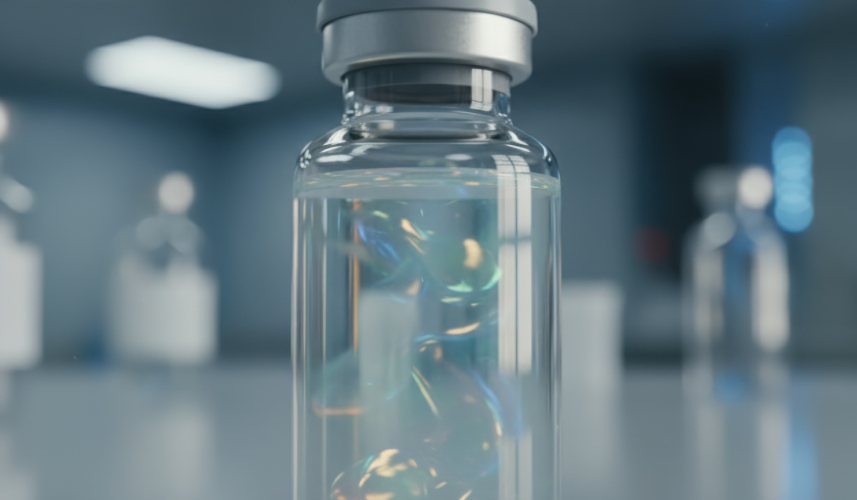
Cell therapies are inherently particulate-rich, containing cellular material that can mask, mimic, or distort the appearance of foreign debris. Batches are small and timelines are critically short, yet the cell therapy sector is bound to particulate guidance based on traditional injectables, which assumes clear solutions, abundant volume, and manipulation that does not compromise the product.
A paper published by industry group BioPhorum last year, entitled "A holistic and strategic approach to characterize, identify and de‑risk the presence of visible particulates in cell therapies," argues that current particulate expectations are misaligned with the biology, manufacturing format, and clinical constraints of these therapies.
In cell therapies, the cells themselves serve as the active ingredient in the final product, making it challenging to control particles by applying final filtration and clearance steps. Guidance on visual inspection from pharmacopeia and regulators call for parenteral preparations to be free from visible particulates, but the characteristics of cell therapies (made more complicated by not being a single modality, instead incorporating autologous, allogeneic and stem cell products) mean they are rarely clear liquids. Products can arrive as opaque suspensions that settle rapidly, and operators cannot simply swirl or invert the containers to create consistent viewing conditions.
Thus, the result can lead to deviations, defensive release strategies, and inconsistent regulatory interpretation. Kymriah (tisagenlecleucel) maker Novartis, for example, received a U.S. FDA 483 follow-up letter in 2023 concluding the company’s sampling plan and inspection methods were not appropriate to assure the bags were free of particulate matter under their own criteria. The issue was not contamination, but rather uncertainty between parenteral expectations and the opaque suspension of engineered T-cells where intrinsic material dominated the visual field.
Other issues encountered by operators cited in a PDA Journal of Pharmaceutical Science and Technology article in October 2025 include a compact cell cluster mistaken for a fragment of film. Under angled light and with only a narrow inspection window before settling, the aggregate produced a flat edged shadow that looked more like extrinsic debris than biology. With no structured reference for what intrinsic aggregates typically look like at that stage, the operator escalated the event, quarantined the batch and triggered destructive sampling. Microscopy later confirmed the particle was a benign T cell micro aggregate formed during the final wash.
The BioPhorum paper argues both escalations could have been avoided with a proper knowledge library. Manufacturers need curated visual references that show what intrinsic particles look like at each stage so operators can stop mistaking biology for contamination.
The paper also calls for a phase appropriate framework that builds an early understanding of the particle landscape. This would help cell therapy teams understand where particles enter the process, build detection approaches that account for modality constraints, and train and qualify operators on realistic inspection methods. A well-built knowledge library would also strengthen controls around dissolution, open handling, and material choices, since operators can quickly separate expected morphology from a true defect.
Subscribe to our e-Newsletters
Stay up to date with news, articles and insights relevant to cell and gene therapy development and manufacturing. Plus, get special offers from Cell & Gene Therapy Review delivered right to your inbox!
Sign up now!