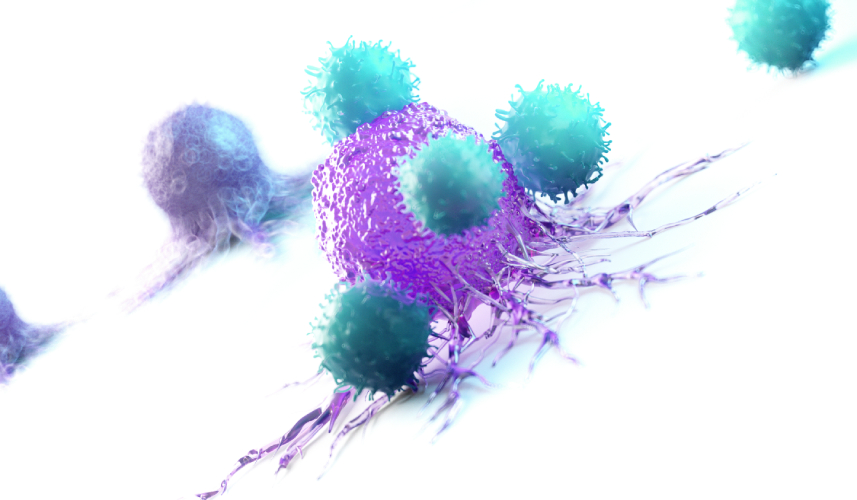
For many decades, two mainstays in effective cancer treatment were chemotherapy and radiation, which destroyed healthy cells alongside cancerous ones. Additionally, they often cause severe side effects and lead to resistance or recurrence of the disease.
However, we’ve recently begun seeing a paradigm shift in the way we treat cancer. Instead of, or in addition to, directly destroying cancer cells by chemotherapy or radiation, we can induce an effective immune response against cancer cells with immune checkpoint blockers, antibody-drug conjugates (ADCs), chimeric antigen receptor (CAR)-T and other cell therapies.
When the first autologous CAR-T cell therapy was approved by the U.S. Food and Drug Administration in 2017, it generated immense excitement in that this new, personalized treatment approach preserved healthy cells in an individual while mostly targeting cells carrying cancer.
However, the cutting edge of cancer research is now expanding beyond conventional T cells to a less-explored, unconventional, unique subset of T cell: mucosal-associated invariant T (MAIT) cells. Just as CAR-T therapies have revolutionized treatments for blood cancers, engineered MAIT cells may stand to change future allogeneic treatments for solid tumors.
Early research on MAIT cells is displaying some promising signs in their ability to fight cancer, especially by turning to an untapped source of MAIT cells: human placentas.
MAIT cells: An unconventional T cell
In recent years, immunologists have become increasingly interested in MAIT cells. As their name implies, they primarily localize to mucosa-rich regions of the body. MAIT cells differ from conventional T cells by their semi-invariant T-cell receptors (TCRs), which recognize metabolites of vitamin B2 (riboflavin) produced by bacteria and fungi and presented on infected cells.
As a result, MAIT cells are vital in the immune response to infection, protecting organs against external microbial threats. MAIT cells also play a role in tissue repair (wound healing) in healthy and pathogenic conditions, although the precise mechanism of this role is unclear.
With respect to cancer, MAIT cells’ ability to produce type 1 cytokines and exert cytotoxic effects suggests their potential for anti-tumor functions. Furthermore, their distinctive expression of chemokine receptors and their localization primarily in tissues suggests their potential to migrate into solid tumors. However, despite their significant promise in cancer treatment, there are limited reports focusing on their therapeutic application in this context.
CAR-T therapy represents a highly promising field in cancer research. Significant progress has been achieved in hematological malignancies. However, these successes have not extended to solid tumors. As a result, researchers are seeking alternate options for targeting solid tumors, including allogeneic products and the use of superior T cells, thus turning their attention to MAIT cells.
Research has uncovered evidence of MAIT cells’ work in targeting cancer. For example, one study looked at how circulating MAIT cells helped identify patients responding to anti-PD-1 therapy to treat metastatic melanoma. Responses to this treatment are highly variable, so researchers are urgently working to identify biomarkers that show which patients may benefit from such therapies.
This study found that the proportions of activated and proliferating MAIT cells and CD8+ T cells were significantly higher and that MAIT cells displayed enhanced expression of genes related to immune activation and effector functions in patients responding to anti-PD-1 therapies, both before they started the therapy and throughout the duration of it. Additionally, researchers found that patients with more than 1.7% of MAIT cells among their peripheral CD8+ population displayed an even better response to anti-PD-1 therapy.
Another study found similar results in patients receiving immunotherapy to treat non-small cell lung cancer (NSCLC). Many patients with this type of cancer do not respond to immune-checkpoint inhibitors.
The study found an increased number of MAIT cells in the tumors of NSCLC patients that had migrated from the peripheral blood via the CCR6-CCL20 axis. Researchers also found circulating MAIT cells to offer predictive value in whether anti-PD-1 immunotherapy may work in NSCLC patients.
Beyond MAIT cells found in peripheral tissues, research done by Pluri and others has indicated that placentas are rich in highly potent, allogeneic, MAIT cells. These placental MAIT cells exhibit inherent biological advantages that could be pivotal in developing effective treatments for difficult-to-treat cancers, especially solid tumors.
Combating graft-versus-host disease
Allogeneic CAR-T products offer numerous advantages, but they also present a significant challenge: the risk of graft-versus-host disease (GvHD). This complication arises when donor CAR-T cells perceive the recipient’s tissues as foreign and launch an immune attack against them. To date, GvHD remains a barrier to developing an allogeneic cell-based immunotherapy platform.
To address this issue, companies are employing genetic manipulation techniques such as disrupting the native T-cell receptor.This modification aims to diminish the T cells’ ability to recognize and react to host tissues, thereby reducing the likelihood of GvHD.
In contrast, MAIT cells possess a unique TCR that inherently eliminates the risk of GvHD. This characteristic allows them to be scaled from a single donor and used across diverse patient populations.
According to Pluri’s data, placental MAIT cells exhibit a lower alloreactivity profile. This reduced alloreactivity suggests that MAIT cells may persist longer in the body, potentially enhancing their therapeutic effectiveness.
While research into placenta-derived MAIT cells is in the early stages, their reduced alloreactivity and potential tumor-fighting characteristics suggest significant potential in treating solid tumors.
Addressing scalability challenges
While CAR-T therapy has improved outcomes for many patients worldwide, it relies on harvesting cells from the patient’s own body for their personal use. Therefore, it can treat only one patient at a time.
Certainly, oncologists and institutions are increasingly adept at initiating treatment, but there remain challenges with autologous treatments. First, it’s difficult to isolate enough cells from a sick patient, and any patient-derived cells that are isolated are typically of low quality. The logistics challenges with autologous therapies are also extremely complex, requiring careful timing at the hospital and manufacturing site. Further, it can also be expensive in that it requires specialized laboratories to meet the needs of local patients.
The autologous nature of CAR T-cell therapy, requiring highly individualized and intricate cell processing, which are major impediments to broader clinical adoption, underscores the need for off-the-shelf approaches that can be used across patient populations — hence, the appeal of allogeneic placental MAIT cells, provided they can be scaled up for practical use.
Although MAIT cells can be found in a frequency of up to 10% of CD3+ T cells in human blood, MAIT cells are known to have limited potential for expansion. To solve this problem, Pluri invented a technique that improved the MAIT isolation method from the placenta, thereby increasing the availability of MAIT cells threefold. The now patented method retrieves MAIT cells, activates them in a better way and increases their growth potential.
Traditional suspension bioreactors leave the cells inside susceptible to damaging shear forces, damaging the quality of those cells. Pluri’s novel cell-expansion technology ensures that the immune cells produced by the process retain their integrity, functionality and therapeutic efficacy by using a packed-bed system and a natural scaffolding process that represents a paradigm shift in immune cell expansion. It creates an environment akin to a natural lymph node.
The approach also reduces the otherwise-complex manufacturing process and high costs associated with autologous CAR-T cell therapy products. The three-dimensional system and method for culturing and then activating immune cells on a large scale supports the creation of new, innovative allogeneic products in a tightly controlled, fully automated, scalable, and efficient manner.
Future perspectives
While CAR-T and other therapies producing an immune response have revolutionized treatments for blood cancers, therapies targeting solid tumors remain a challenge, despite one recent FDA approval in melanoma.Placenta-derived MAIT cells offer the potential for significant breakthroughs because of their apparent proclivity for navigating the complex environment for solid tumors.
An allogeneic platform that uses readily available donated cells from human placentas could create a cost-effective, off-the-shelf therapy for solid tumors with the potential to revolutionize cancer treatment around the globe. Combining that allogeneic platform with the latest cell-expansion technology is the key to making these treatments available to many more patients than currently possible.
References
Nel, I., et al. (2021). MAIT cells, guardians of skin and mucosa? Mucosal Immunol. 14, 803–814.
Hinks, T., et al. (2020, May 27). MAIT Cell Activation and Functions. Front Immunol. 11:1014.
Treiner, E. (2023, March 20). Mucosal-associated invariant T cells in hematological malignancies: Current knowledge, pending questions. Front Immunol. 14, 1160943.
De Biasi, S., et al. (2021). Circulating mucosal-associated invariant T cells identify patients responding to anti-PD-1 therapy. Nat Commun. 12, 1669.
Shi, L., et al. (2023, Jan). Clinicopathological and predictive value of MAIT cells in non-small cell lung cancer for immunotherapy. J Immunother Cancer.11(1), e005902.
Lonez, C., et al. (2024). Allogeneic CAR-T Therapy Technologies: Has the Promise Been Met? Cells. 13(2), 146.
Caldwell, K., et al. (2021). Allogeneic CAR Cell Therapy—More Than a Pipe Dream. Frontiers in Immunology. Volume 11.
Li, H., et al. (2020). Applications of genome editing technology in the targeted therapy of human diseases: mechanisms, advances and prospects. Sig Transduct Target Ther, 5, 1.
Cancer Research Institute. Immunotherapy: By Treatment Types. [Accessed July 25, 2024]
Challener, C. (2023, Jan 31). Moving from Autologous to Allogeneic Cell Therapies: Drivers and Hurdles. Pharma's Almanac.
Ventola C. (2017, Aug). Cancer Immunotherapy, Part 3: Challenges and Future Trends. P T. 42(8):514-521.
Raviv, L., et al. System and methods for immune cells expansion and activation in large scale. Pluri Biotech Ltd. Patent numberWO2023228182A1.
Mullard, A. (2024, Apr). FDA approves first tumour-infiltrating lymphocyte (TIL) therapy, bolstering hopes for cell therapies in solid cancers. Nat Rev Drug Discov. (4):238.
Subscribe to our e-Newsletters
Stay up to date with news, articles and insights relevant to cell and gene therapy development and manufacturing. Plus, get special offers from Cell & Gene Therapy Review delivered right to your inbox!
Sign up now!