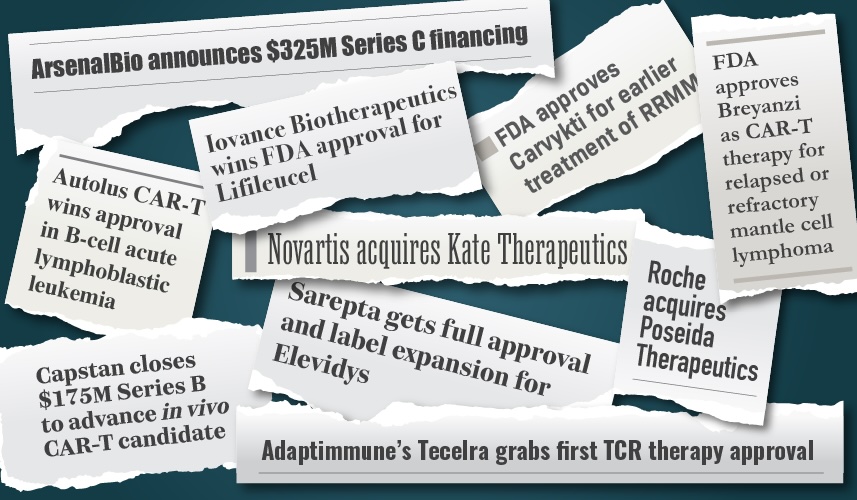
10. First TIL approval
In February, Iovance Biotherapeutics received FDA approval for Lifileucel, the first tumor-infiltrating lymphocyte (TIL) therapy — a major milestone in cancer treatment.
TIL therapy involves extracting T cells from a patient’s tumor, expanding them in the lab to increase their numbers, and then reintroducing them into the patient to target and destroy cancer cells more effectively. This approach is especially important for cancers that are difficult to treat with traditional therapies, such as metastatic melanoma
TIL therapy was pioneered by Steven Rosenberg, M.D., and his colleagues in the NCI’s Surgery Branch. In the late 1980s he led the first clinical trial of TILs. TIL therapy marks a significant step forward in the broader field of adoptive cell therapy, offering a personalized, potentially more effective treatment option for patients who have not responded well to conventional treatments like chemotherapy or checkpoint inhibitors.
The approval of the first TIL therapy validates the potential of personalized, cell-based immunotherapies and opens the door for further advancements and refinements, offering hope for better outcomes in cancer treatment, particularly for solid tumors.
9. Manufacturing innovations
In 2024, manufacturing innovations are playing a crucial role in advancing cell and gene therapy, addressing some key challenges such as cost, scalability and quality control.
Scalability and automation: The shift toward automated manufacturing processes promises to make CGT production more scalable. Technologies like automated cell culture systems and gene-editing tools are improving consistency and reducing manual labor, enabling more efficient production of therapeutics. Closed-loop systems, where the entire manufacturing process is contained within a controlled environment, are reducing contamination risks and improving reproducibility, essential for large-scale production.
Cost reduction: New technologies aimed at reducing the complexity of manufacturing and improving the yield of therapeutic products have started to drive down costs. Cellares has moved the space forward over the last five years with the introduction of the Cell Shuttle, a fully automated manufacturing platform. Others have followed with similar, albeit unique approaches to automated manufacturing, including Multiply Labs and Cellular Origins. In June, Ori Biotech launched its proprietary CGT manufacturing platform, the Iro, with an unveiling at ISCT in Vancouver, bringing even more innovative options to cell therapy manufacturing arena.
Quality control and monitoring: In 2024, innovations in real-time monitoring technologies (such as sensors and AI-driven analytics) are ensuring better quality control during production. These systems monitor factors like cell viability, vector transduction efficiency, and gene editing precision, ensuring the final product meets regulatory standards and is safe for patients. Advances in analytics platforms will improve the ability to predict therapeutic outcomes based on manufacturing conditions, allowing for better control and optimization of cell therapy products.
Supply chain innovation: Innovations in logistics and cold-chain management are addressing the challenges of transporting time-sensitive, biologically active products. Advances in packaging, temperature control, and data-tracking technologies are helping ensure the integrity and viability of CGT products during transit. One example of such innovation launched in 2024 by Cryoport Systems is the Cryoport Express Cryogenic HV3 Shipping System, which enhances mobility and ease of use, but also integrates state-of-the-art monitoring and risk mitigation features to ensure safe and secure transport for high-volume cryogenic payloads.
Overall, manufacturing innovations in 2024 are making CGT efficient, cost-effective and scalable, with significant implications for both the availability of these therapies and their long-term success in treating complex diseases.
8. Novartis acquires Kate Therapeutics
Any CGT news with a $1.1 billion price tag in the headline makes us all sit up and take notice. Novartis’ November acquisition of Kate Therapeutics will likely have broader implications for the gene therapy industry.
Novartis was first across the CAR-T finish line with Kymriah and has the first FDA approved gene therapy, Zolgensma, on its resume. By acquiring Kate Therapeutics, Novartis gains access to promising technologies in gene therapy and RNA-based therapies. Kate Therapeutics has a pipeline that includes potential therapies for diseases like sickle cell anemia, hemophilia, and other genetic disorders.
As Novartis strengthens its overall position in gene therapy, it could increase competition with other major players in the field. This could, in turn, lead to faster innovation and improvements in gene therapy technologies, potentially lowering costs and increasing access to cutting-edge treatments. All in all a good thing for an industry intent on improving patient access.
This acquisition positions Novartis as a more prominent player — which for CGT is a good indicator of positive momentum, something that’s been in short supply in the last few years.
7. CAR-T label expansions
Label expansions of approved CAR-T cell therapies may not necessarily garner the headlines they deserve. Here are some key developments and label expansions for CAR-T therapies in 2024:
Novartis’ Kymriah
Approved indications: Initially approved for pediatric and young adult patients with acute lymphoblastic leukemia (ALL) and for adult patients with relapsed or refractory large B-cell lymphoma (LBCL).
Label expansion: Expanded to include chronic lymphocytic leukemia (CLL) and mantle cell lymphoma (MCL).
Kite’s Yescarta
Approved indications: Initially approved for adult patients with relapsed or refractory LBCL and other large B-cell lymphomas.
Label expansion: Approved for additional indications, such as follicular lymphoma and high-grade B-cell lymphoma.
Janssen’s Carvykti
Approved indications: Initially approved for relapsed or refractory multiple myeloma after four or more prior therapies.
Label expansion: Granted an expanded indication for relapsed or refractory multiple myeloma (RRMM) patients who have received at least two prior lines of therapy, including a proteasome inhibitor and an immunomodulatory drug (IMiD).
Bristol Myers Squibb's Breyanzi
Approved indications: Originally approved for adult patients with relapsed or refractory LBCL.
Label expansion: Expansion for use in patients with primary mediastinal B-cell lymphoma (PMBCL), a rare subtype of LBCL.
Kite’s Tecartus
Approved indications: Initially approved for patients with mantle cell lymphoma (MCL).
Label expansion: Approval for relapsed or refractory chronic lymphocytic leukemia (CLL).
Bristol Myers Squibb's Abecma
Approved indications: Initially approved for patients with multiple myeloma.
Label expansion: Expanded for use in patients with high-risk smoldering multiple myeloma (SMM), a precursor to full-blown multiple myeloma.
Ongoing research and future expansion:
Solid tumors: There have been some promising preclinical and early-phase clinical trials, with specific CAR T therapies targeting cancers such as lung cancer, pancreatic cancer, and glioblastoma.
Label expansions of CAR-T cell therapies represent significant advancements in cancer treatment, offering more options to patients with hematologic malignancies and potentially laying the groundwork for new treatments in solid tumors. More options for treating clinicians and patients is indeed a good thing, and worthy of a spot on my top 10 list.
6. Sarepta’s Elevidys approval
Technically, Elevidys was approved in June 2023, but received expanded approval from the FDA in 2024. The expanded approval was significant in several ways:
Broader patient access: The expanded approval allowed Elevidys to be used in a wider range of patients, including those with less advanced stages of Duchenne muscular dystrophy (DMD). Previously, the therapy was approved only for younger patients with a specific genetic mutation. With the expanded approval, Elevidys is now available to older children and adolescents, who may benefit from early intervention.
Treatment efficacy: The approval further validated the clinical efficacy of Elevidys in slowing disease progression in a debilitating muscular disorder.
Market impact and cost: The expanded approval made Elevidys a more prominent player in the gene therapy market for rare diseases, and its potential for widespread adoption could influence pricing strategies and market dynamics.
The label expansion was described as “a major milestone for Sarepta Therapeutics and the best possible outcome for the company,” by William Blair analyst Tim Lugo. He went on to say it was a “transformational” milestone for the company and for DMD patients. Based on Sarepta’s Q3 publicly reported results, Elevidys revenue of $181 million (a 48% increase in sales) which roundly exceeded analysts' estimates, one could agree.
The high cost of gene therapies in general remains a challenge, but increased accessibility could drive further conversations around reimbursement and insurance coverage.
5. First TCR approved
In August 2024, the U.S. FDA gave Adaptimmune’s Tecelra (afami-cel) an accelerated approval to treat adults with unresectable or metastatic synovial sarcoma. It is the first TCR therapy approved for cancer and the first engineered T cell therapy approved to treat a solid tumor.
According to Adaptimmune, synovial sarcomas can be aggressive and typically affect men in their 30s or younger. Treatment options are limited, and median five-year survival rates for people with metastatic disease are about 20%.
TCR and CAR-T cell therapies are both groundbreaking immunotherapies, however, they differ in how they recognize cancer cells and in their potential applications. TCR-based therapies are perhaps more promising for solid tumors because they extend the reach of immune therapies to a wider range of cancer types (especially solid tumors) and allow for precise targeting of intracellular cancer antigens.
While CAR-T therapies have already shown considerable success in blood cancers, TCR therapies offer an exciting new frontier. We should not forget that both approaches share a similar challenge: cost (a topic for another day). However, together, these approaches provide complementary strategies in the growing arsenal of cancer treatments.
The first TCR approval cracks the top 5 CGT storylines.
4. Investments, IPO and optimism
Is 2024 the year that biotech investing, and specifically investment in cell and gene therapy turned the proverbial corner? One could indeed make that argument. A strangely familiar sensation returned in 2024. Optimism.
While access to capital isn’t as plentiful as it once was, there were a number of high-profile investments, raises and IPOs to nurture that optimism. I’ve heard it said that “capital is available for good science” and rising investor confidence in the form of strong funding rounds and public offerings demonstrate increasing confidence in CGT.
Notable events in 2024 (in no particular order):
• Capstan Therapeutics closed a $175 million Series B to advance an in vivo CAR-T candidate in autoimmune disorders.
• Arsenal Biosciences raised $325 million in a Series C for its pipeline of solid tumor candidates that use a proprietary T cell engineering technology.
• Kyverna Therapeutics IPO in February raised almost $319 million to continue its progress in developing cell therapies for patients suffering from autoimmune diseases.
• CRISPR Therapeutics announced a $280 million registered direct offering, positioning the company to execute ongoing clinical trials in oncology, cardiovascular and diabetes, and further accelerate its auto-immune and in vivo gene writing programs.
• AvenCell Therapeutics raised $112 million in Series B financing to advance both autologous and allogeneic switchable CAR-T cell therapies
• Obsidian Therapeutics raised $160 million in a Series C to support its development of an investigational TIL cell therapy in advanced melanoma and non-small cell lung cancer.
As 2025 arrives, the industry looks to build on this progress and turn optimism into confidence.
3. CAR-T for autoimmune
CAR-T in the autoimmune setting has been in headline after headline in 2024. It began to pick up speed in 2021, when Dr. Georg Schett from the German Centre for Immunotherapy (DZI) at Universitätsklinikum Erlangen, published a case report of a 20-year-old patient with systemic lupus erythematosus (SLE) in the NEJM. It marked the first time an autoimmune patient was treated with CAR-T cells, and the results have been hailed as a “milestone in the therapy of autoimmune diseases.”
In the years since we’ve seen an extraordinary increase in the number of clinical trials exploring CAR-Ts for autoimmune diseases. Much of the focus has been on SLE, but the list has expanded to include multiple sclerosis, myasthenia gravis, lupus nephritis, scleroderma, ulcerative colitis, Crohn’s disease, arthritis and more.
Market opportunity in SLE alone was estimated at $1 billion in FY2023 by Oppenheimer. Current treatments lack strong benefit, and the addressable patient opportunity was estimated at over $10 billion.
The number of companies in this arena has grown exponentially, a partial list includes:
Kyverna Therapeutics
Cabaletta Bio
Adicet Bio
Autolus Therapeutics
CRISPR Therapeutics
Fate Therapeutics
Century Therapeutics
Nkarta
Cartesian Therapeutics
ImmPACT Bio
Allogene Therapeutics
Gracell Biotechnologies (acquired by AstraZeneca)
Novartis
Bristol Myers Squibb
Sonoma Biotherapeutics
Quell Therapeutics
Spencer Knight recently shared a graphic listing many of the companies, categorized by disease areas and autoimmune targets.
It’s not a stretch to say CAR-T for autoimmune has reinvigorated the cell therapy space. Acquisitions, investments and Kyverna’s successful IPO certainly grabbed some headlines. However, additional clinical data is needed. The potential for durable, drug-free remission is attractive, but there is much work to be done.
We cannot forget the high cost associated with the manufacturing of autologous CAR-T products. Add to that the significant administrative burden on the hospitals that treat patients today for a few specific cancers. How quickly can they be ready to treat more patients with likely severe autoimmune disease, who have possibly failed several prior therapies. CAR-T therapies are primarily deployed by hematologists and oncologists to treat cancer. Now rheumatology and oncology teams will need to coordinate care effectively in multiple institutions. The pinch points that exist today in the apheresis departments and cell therapy labs will also need to be addressed. Hopefully manufacturing processes will be optimized, improved, and deliver lower overall cost to manufacture, driven by the increased volumes.
However, the overall optimism and excitement cannot be ignored, and the early clinical data published has demonstrated significant promise for cell therapy in patients with autoimmune disease, making it one of the top CGT storylines in 2024.
2. Roche acquires Poseida
In November, Swiss pharmaceutical giant Roche spent $1.5 billion to acquire San Diego-based Poseida Therapeutics. Roche described it in this way: “The acquisition supports Roche Pharma‘s strategy of allowing for a range of potentially first and best-in-class therapies across multiple diseases, uniquely positioning us in the new field of donor, derived off-the-shelf cell therapies.”
Many of the CAR-T programs were already covered by an existing deal between Poseida and Roche inked in 2022 when the two signed a broad strategic collaboration and license agreement focused on developing allogeneic CAR-T therapies directed to hematologic malignancies.
There can be no doubt that it is another big step forward for allogeneic CAR-T cell approaches.
Over the last six years, Roche has acquired Spark Therapeutics (via Genentech a Roche subsidiary), Strimvelis from GSK, partnered with Blueprint Medicines, partnered with Cellectis, and entered into a strategic partnership with Sarepta Therapeutics earlier in 2024. And Roche has also been investing heavily in internal research and development capabilities. The acquisition of Poseida further solidifies Roche’s presence in cell and gene therapy and establishes it as a key pharma player in the space.
In Phoenix at the annual Meeting on the Mesa this past October, Alliance for Regenerative Medicine CEO Tim Hunt reminded the audience that 13 of the 15 largest pharma companies now have an “active presence” in the CGT space. Novartis, Bristol Myers Squibb, Gilead Sciences, Johnson & Johnson, Astellas Pharma, Bayer, Eli Lilly, Novo Nordisk and Pfizer, are all members of the Alliance for Regenerative Medicine.
Big Pharma looks set to play an increasingly important role in the pace of CGT progress in 2025 and beyond.
1. Record number of FDA approvals
In January 2019, Scott Gottlieb, FDA Commissioner at the time, issued a statement on “new policies expected to advance the development of safe and effective cell and gene therapies.” In the years since, the quote below has rattled through the hall of many an industry conference.
“And by 2025, we predict that the FDA will be approving 10 to 20 cell and gene therapy products a year based on an assessment of the current pipeline and the clinical success rates of these products.”
2024 seemed set to deliver on the promise. Expectations were that up to 17 new cell and gene therapies could get the green light, including groundbreaking treatments for hemophilia A, dystrophic epidermolysis bullosa, and the first adoptive cell therapies for solid tumors.
2024 was indeed up to the task. The CGT industry witnessed a surge in FDA approvals. The number of approved cell and gene therapies now sits at 43. We saw 7 new approvals and some important accelerated approvals in 2024.
Recall that in 2023 CBER made changes to its organizational structure “to address the substantial growth in the development of innovative, novel products and the ever-changing public health landscape.” CBER established the Office of Therapeutic Products (OTP). This new “super office” was the result of a reorganization of the Center’s Office of Tissues and Advanced Therapies (OTAT) and included six new offices within the super office structure. Hiring picked up, and if 2024 is any barometer, the changes had a real impact.
So, while we’re still not at 10-20 approvals/yr, as we roll into 2025, the odds tend to be in Dr Gottlieb’s favor! A record number of CGT approvals is my top storyline for the year.
Subscribe to our e-Newsletters
Stay up to date with news, articles and insights relevant to cell and gene therapy development and manufacturing. Plus, get special offers from Cell & Gene Therapy Review delivered right to your inbox!
Sign up now!