Gene therapy is one of the most exciting treatment approaches on the market. It holds significant promise to reduce the number of routine medical interventions otherwise required and even deliver curative, long-acting therapeutic effects. This has been realized in the clinic most recently with Pfizer’s announcement of the treatment of Hemophilia B, a rare inherited bleeding disorder, with fidanacogene elaparvovec.1
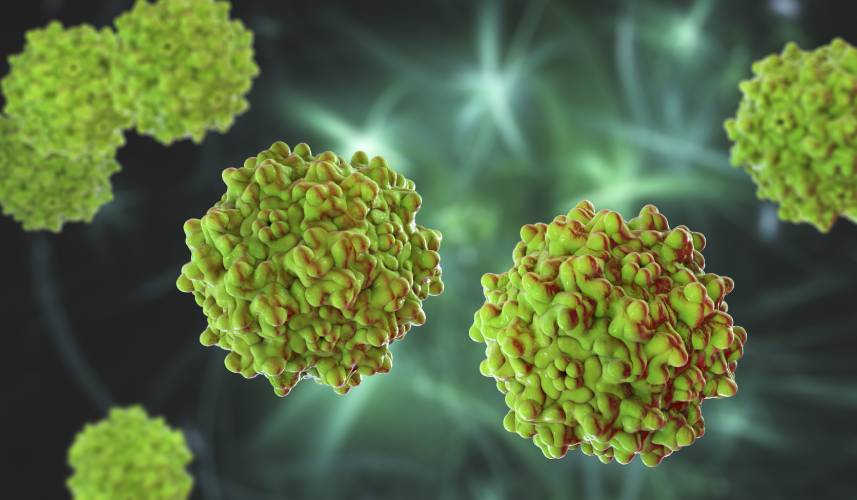
For the successful delivery of functional genes to patients, recombinant adenoviral-associated vectors (AAVs) are the most established and leading platform for rare and severe human diseases. AAV is a non-enveloped, single-stranded DNA virus that belongs to the family Parvoviridae and is a Dependoparvovirus, meaning that it requires a helper virus for efficient production (generally adenovirus or herpes simplex virus). The engineered AAV vector contains an expression cassette up to 4.7 kilobases in size.2
The first AAV gene therapy was approved by the U.S. Food and Drug Association in 2017, and as of 2022 over 200 clinical trials were ongoing across the globe using this vector.2 Citeline’s Pharma R&D Annual Review also highlights AAVs as the most popular vector with over 500 projects in the pipeline.3
Why is this the case? Offering low immunogenicity, long-term gene expression, and non-pathogenic behavior, AAVs are ideal for gene therapy, with bioengineering having additionally improved transduction efficiency and their ability to navigate immunological barriers.4
Mateusz Imiołek, Principal Scientist at Waters Corporation, comments on the rise of AAVs: “This was evident for me during this year’s American Society for Gene and Cell Therapy (ASGCT) Annual Meeting, where there were at least 50 scientific sessions dedicated to this viral vector, and over one-third of the 1,900 conference proceedings featured 'AAV' in their title. “This shouldn’t come as a surprise considering AAVs are the most mature gene delivery technology, first discovered over 60 years ago.”
Shawn Sternisha, Global Commercial Product Manager for Centrifugation at Beckman Coulter Life Sciences, adds that “Another benefit is that AAVs can be developed in Biosafety Level 1 (BSL1) laboratories. They also exhibit tissue tropism, targeting specific regions of the body, and can enter both dividing and non-dividing cells. Furthermore, they can maintain high levels of gene expression in patients over long periods of time.”
With so many advantages to be had with AAVs, the routine and standardized monitoring of their production remains crucial to ensuring safety and efficacy. Svea Cheeseman, Director of Product Market Management at Refeyn, highlights a key safety risk: “The patient’s immune system may react to the treatment, and this risk is increased if there are impurities in the product (i.e., AAV vector), such as empty or only partially loaded capsids, which also reduce the treatment’s efficacy.”
Analytical characterization
Critical quality attributes (CQAs) that need to be monitored include capsid titer, packaging efficiency (i.e., empty-to-full capsid ratio), viral genome integrity, aggregation content, and other process-related impurities. Not all these methods are high throughput, with some being quite the opposite, in that they can require longer turnaround times, especially methods such as transmission electron microscopy (TEM), which is used to determine whether capsids are empty, partially full, or completely full.
Imiołek comments on the slow progress of such methods, and the impact this has on gene therapy’s eventual cost once on the market: “New therapies are being continuously approved, as we have just seen with Pfizer’s treatment for hemophilia B. What’s surprising is that advances in analytical characterization have not quite followed suit, especially for routine measurements needed for ever-expanding manufacturing that supports clinical trials. Cost-effective manufacturing and efficient analytical workflows are still underdeveloped, which weighs on the final price of current gene therapy treatments.”
Sternisha says there is normally consensus on so-called gold-standard techniques, which have historically provided the most accepted results for a given parameter. Analytical ultracentrifugation (AUC), for example, has been applied for years to measure the encapsidation heterogeneity of samples. This technique provides a relative abundance determination for how many particles are full versus empty or only partially filled.
AUC was first applied to AAVs around 2015 and has since become the standard for assessing particle loading, delivering the highest resolution for quantifying partial capsids. “…[resolution] is where many other techniques fall flat,” mentions Sternisha.
“AUC is also conducted under native biological conditions—without the need for any matrices or standards.” However, users should bear in mind that this method can be difficult to use where timely tracking of manufacturing processes is critical or deployment in a quality control-regulated laboratory is required. In such a situation, alternative techniques might be preferable, he suggests.
Single-particle mass measurement and imaging methods, such as mass photometry or adaptation of mass spectrometry methods in the form of charge detection mass spectrometry (CDMS), and light scattering characterization methods (multiangle light scattering, MALS, and dynamic light scattering) are also useful and increasingly reliable. Information about sample constituents can also be derived with size exclusion chromatography (SEC) coupled to MALS. “In this way, multiple critical quality attributes can be simultaneously determined during a single analytical run,” Imiołek remarks.
On the genome analysis side of things, PCR methods are heavily used for quantifying viral genomes, while ELISA is common for quantifying capsids/particles. Newer developments in next-generation sequencing and optimized genome integrity analyses are available, using liquid chromatography methods with ion pairing reverse phase and anion exchange chromatography. Cell-based assays are also widely used for assessing functionality. “There are several new techniques, but the most common ones are still those that have been well-established,” Sternisha points out.
Click here to read the full article.
This article was originally published on Biocompare.
Subscribe to our e-Newsletters
Stay up to date with news, articles and insights relevant to cell and gene therapy development and manufacturing. Plus, get special offers from Cell & Gene Therapy Review delivered right to your inbox!
Sign up now!